| Profession |
Environmentalist and Political activist |
| Famous For |
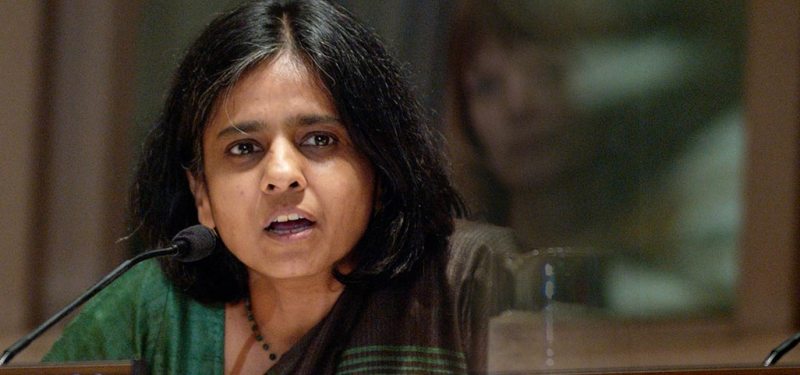
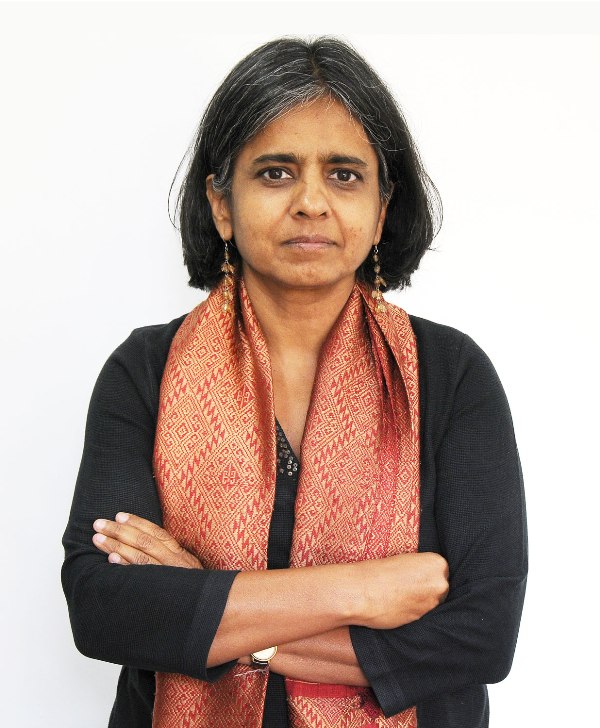
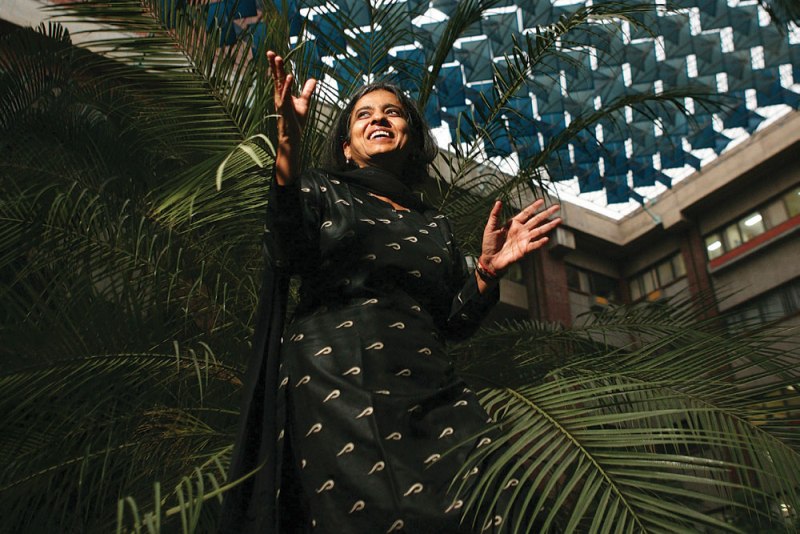
Receiving the 'Padma Shri' by the government of India in 2005. She is especially famed for her exemplary work on rainwater harvesting for which she has received the World Water Prize. She, along with the government of India, worked in policy building paradigms for community-based water management in India. |
| Positions Held |
• 1982 to Present- Director General of Centre for Science and Environment, New Delhi
• 1992 to Present- Director and Publisher of Society for Environmental Communications, New Delhi
• 1980 - 1981- Vikram Sarabhai Institute for Development Research Ahmedabad as
Research Assistant
• Editor of Down To Earth (an online magazine) |
| Physical Stats & More |
|
| Eye Colour |
Black |
| Hair Colour |
Salt and Pepper |
| Filmography |
• One Point Seven (TV Series documentary) Self 2019
• Climate Change: The Facts (Documentary) Self - Centre for Sciene and Enviroment Director General 2017
• RiverBlue (Documentary) Self 2016
• Before the Flood (Documentary) Self 2012
• Democracy Now! (TV Series) Self- Episode dated 7 December 2012 (2012) Self
2008
• Frontline (TV Series documentary) Self - Center for Science and Environment, New Delhi- Heat (2008)
• Weather Report (Documentary) Self - Centre for Science & Environment
2008
• Flow: For Love of Water (Documentary) Self2007
• CNN Future Summit: Saving Planet Earth (TV Special) Self |
| Career |
|
| Publications |
• 1989- Sunita co-authored the publication Towards Green Villages advocating local participatory democracy as the key to sustainable development.
• 1991- She co-authored the publication Global Warming in an Unequal World: A case of environmental colonialism.
• 1992- She co-authored towards a Green World: Should environmental management be built on legal conventions or human rights?
• Since the Kyoto Protocol in 1997, she has worked on a number of articles and papers on issues related to flexibility mechanisms and the need for equity and entitlements in climate negotiations.
• 2000- She co-edited the publication Green Politics: Global Environmental Negotiations, which looks at the emerging ecological globalisation framework and puts forward an agenda for the South on global negotiations.
• 1997- She pushed the concern for water harvesting and co-edited the book Dying Wisdom: Rise, Fall and Potential of India's Water Harvesting Systems. Since then, she has worked on a number of articles on the policy. interventions needed for ecoregeneration of India's rural environment and poverty reduction.
• 1999- She co-edited the State of India's Environment, The Citizens' Fifth Report.
• 2001- She wrote 'Making Water Everybody’s Business: the practice and policy of water harvesting.' |
| Awards, Honours, Achievements |
• 2002- Dr B.C. Deb Memorial Award for the popularisation of science by the Indian Science Congress Association, Calcutta.
• 2003- Dadabhai Naoroji Millennium Award by Dadabhai Naoroji International Society, New Delhi.
• 2003- Rotary Eco Foundation Award – outstanding work done in the field of rainwater harvesting in Delhi and surrounding areas.
• 2004- She received the Chameli Devi Jain Award for Outstanding Women Media person.
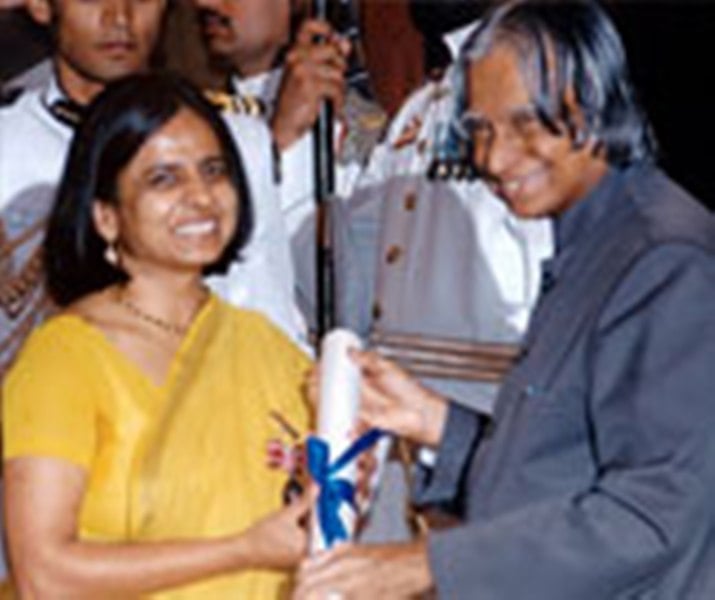
• 2005- She was awarded the Padma Shri by the Government of India.
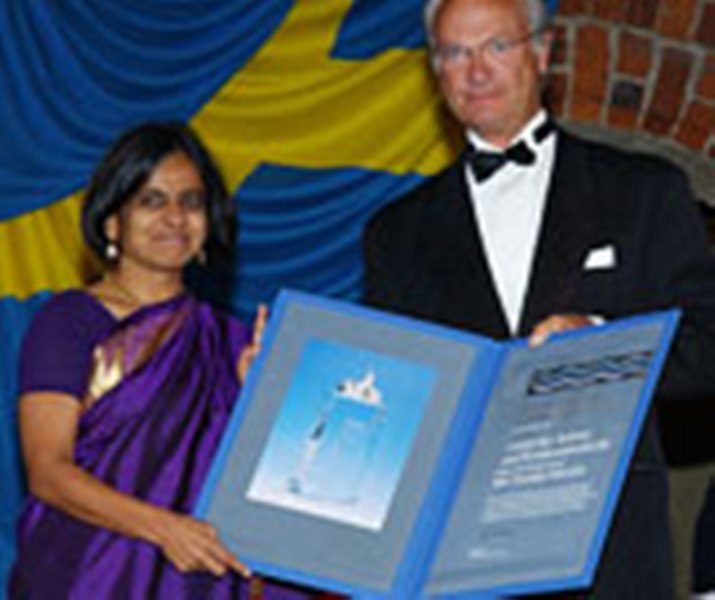
• 2005- The Centre for Science and Environment under her leadership was awarded the Stockholm Water Prize.
• 2006- Bharat Shiromani award by Shiromani Institute.
• 2008- Prince Albert II of Monaco Foundation water award.
• 2008- Dr. Jean Mayer Global Citizenship award, Tufts University, Massachusetts.
• 2008- Prince Albert II of Monaco Foundation water award.
• 2009- She was awarded an honorary Doctor of Science by the University of Calcutta.
• 2009- She was conferred with the Raja-Lakshmi Award from Sri Raja-Lakshmi Foundation, Chennai.
• 2011- The Citizen of the Decade Award 2011' from the Rotary International District 3201, Kerala.
• 2011- The M R Pai Memorial Award instituted by All-India Bank Depositors' Association (Mumbai).
• 2012- Kirloskar Vasundhara Sanman by Kirloskar Vasundhara International Film Festival, Pune.
• 2012- Doctor of Laws (Honorary), University of Alberta, Canada.
• 2014- Energy and Environment Foundation Global Excellence Award in Renewable Energy by Energy and Envronment Foundation Delhi.
• 2015- Centre for Science and Environment got the Public Institution of the year award by Business Standard
• 2016- Narain was named to Time Magazine's list of 100 Most Influential People.
• 2016- Narain received the IAMCR Climate Change Communication Research in Action Award.
• 2017- Sri Chukkapalli Pitchaiah Foundation Award for 2017 instituted by the Sri Chukkapalli Pitchaiah Foundation, Vijayawada, Andra Pradesh.
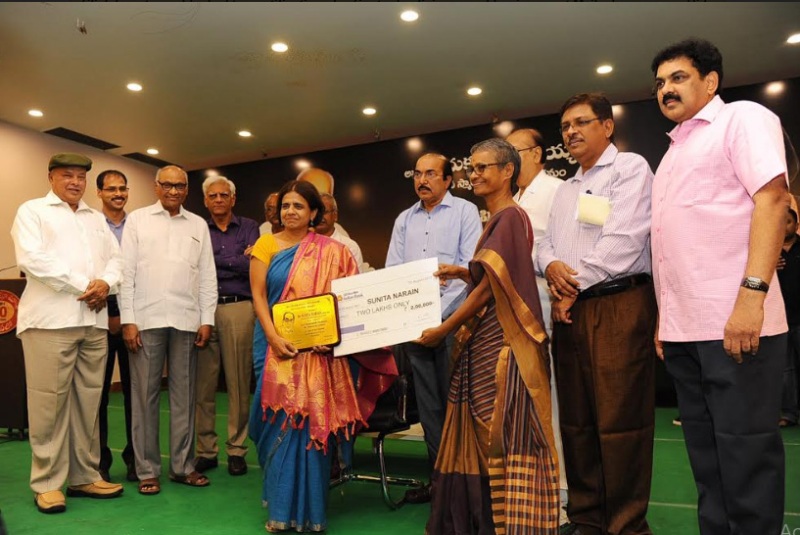
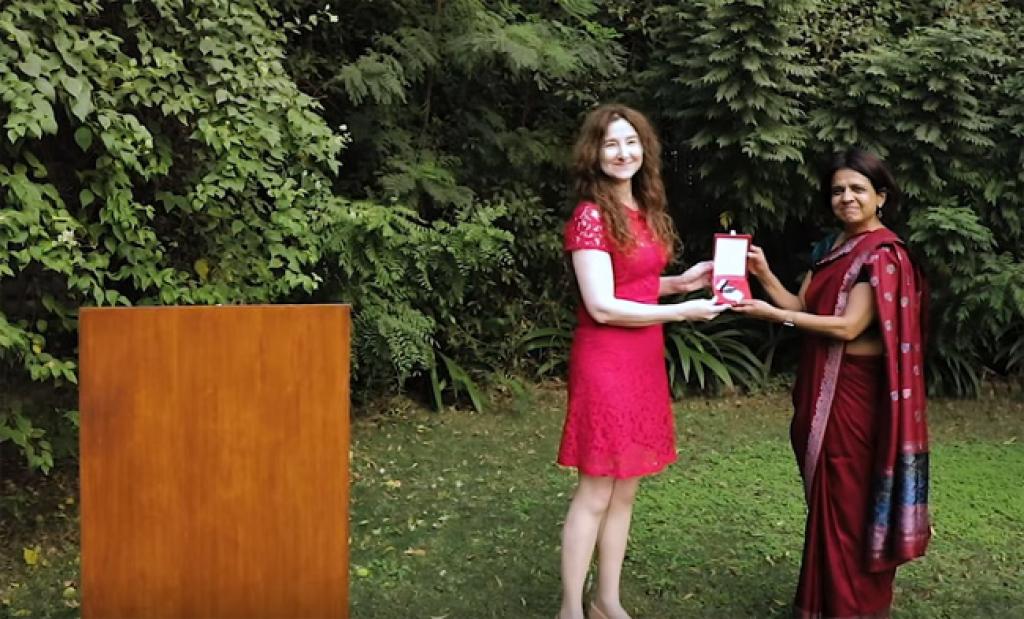
• 2020- She won Edinburgh Medal.
 |
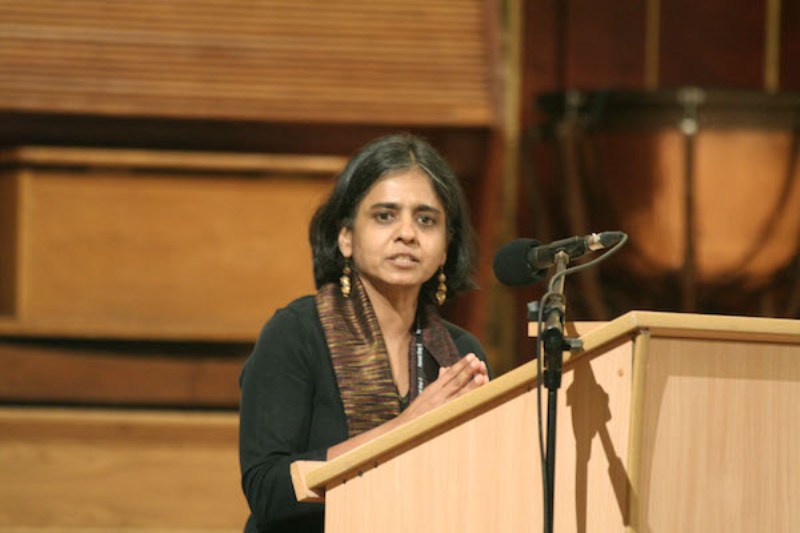
| Major Lectures |
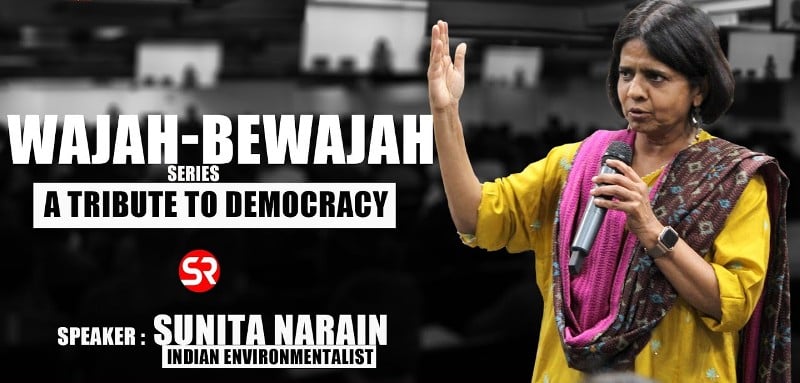
• 2017- 5th Chukkapalli Pitchaiah Memorial Lecture at Vijayawada
• 16th Business & Community Foundation’s Annual Lecture on the Topic “State of India’s Environment & Corporate Responsibility.
• 2016- B D Pande Memorial Lecture in Almora organized by Uttarakhand Seva Nidhi Paryavaran Shiksha Sansthan'
• Plenary talk at the 50th Anniversary Conference of Institute of Development Studies, University of Sussex, UK
• Keynote speech at Utopia 2016: Imagination und Entwurf organized by IFK International Research Center for Cultural Studies, Vienna
• 2015- Third annual Girish Sant memorial lecture at Indian Institute of Technology, Mumbai
• 2014- 20th Annual Lecture on Energy and the Environment, University of California, Berkeley, April 2014.
• Water Institute distinguished lecture at University of Waterloo, Canada
• 2012- Lecture for the Technology Mission: War for Water – Our water-waste management imperative: The need for literacy, involvement and commitment to change at IIT-Guwahati on October 5, 2012.
• Public lecture on “Who speaks for water?” at University of Alberta, Canada, March 2012.
• 2011- Speech on Climate Change: The challenge and opportunity for our world, delivered at Asian University for Women Symposium: Imagining Another Future for Asia: Ideas and Pathways for Change, held at Dhaka, Bangladesh on January 21-22, 2011.
• 2008- K.R. Narayanan oration on ‘Why Environmentalism Needs Equity: Learning From the Environmentalism of the Poor to Build Our Common Future, delivered at The Australian National University, Canberra.
• 2006- Presentation on ‘How to Operationalise the agenda for Water Conservation’ at the meeting of Parliamentary forum on water conservation and management organized by Cell on Parliamentary Forum on Water Conservation and Management, Lok Sabha Secretariat.
• 2005- Talk on ‘ Water conservation’ as part of Lecture series for Members of parliament, organised by Bureau of Parliamentary studies and Training, Lok Sabha Secretariat.
• 2004- Lecture given as part of the Leaders in their field lecture series on ‘Urban life – a living hazard’ at the India Habitat Centre.
• Lecture at the Global Conscience on Simultaneous responsibility to the environment and poverty? Organised by the Ecological Council, Copenhagen, Denmark.
• Keynote lecture at the workshop on rainwater harvesting - How to make it a public movement organised by the National Botanical Research Institute, Lucknow, India.
• Inaugural address at the state level media seminar on rainwater harvesting organised by Jalanidhi and Press club at, Thiruvananthapuram, India.
• Lecture titled 'From Your Flush to the River: Delhi's responsibility for a clean Yamuna’ as part of the Agenda Delhi series of lectures organised by India Habitat Centre and Indian Express at the India Habitat Centre.
• 2003- Lecture given at the 2nd International Symposium on ecological sanitation at Lubceck, Germany.
• Lecture on Human Health and Ecological Security organised by the Foundation for Ecological Security at the India International Centre, New Delhi.
• Foundation Day lecture given at the Ladakh Ecological Development Group at Leh, Ladakh.
• Keynote lecture at the International Conference on Public-Private Partnership organised by Swiss Coalition of Developing Organisations at Berne, Switzerland.
• Council of Scientific and Industrial Research Diamond Jubilee lecture at the National Botanical Research Institute, Lucknow, India.
• Speech given at the Symposium on the Johannesburg Challenge: Perspectives and Priorities, Berlin, Germany, organised by the German Council of Sustainable Development.
• 2000- The Future of India’s Urban Environment, paper presented at the Swedish-Asian Forum on the Future of Asia’s Environment, Stockholm 15-17, 2000.
• Lecture given to members of the US-India Roundtable on the issue of "Health and Environment" New York, America.
• The Global Dialogue on Natural Resources: The Sustainability Challenge lecture at EXPO 2000, Hanover, Germany.
• My Agenda for Johannesburg”, at the conference “ Countdown for Johannesburg” organized by the Heinrich- Boll Foundation.
• 1999- What possibilities there are for Green Politics in Asia and what is meant by Green Politics in the Asian context, Colombo, Sri Lanka.
•We all live downstream: Urban industrial growth and its impact on water systems; plenary lecture, 9th Stockholm Water Symposium, Sweden.
• 1998- NGO workshop on Emission Trading and Entitlements: organised by CSE and co-sponsored by German NGO FORUM, Stadthalle, Bonn, Germany.
• 1997- Multilateral Environmental Agreements and the World Trade Organisation at the Symposium on Trade, Environment and Sustainable Development, Organised by the World Trade Organisation, Switzerland.
• Environmental Security, plenary talk at the 1997 Open Meeting of the Human Dimensions of Global Environmental Change Research Community, IIASA, Austria.
• How to build bridges between trade, environment and development to improve the effectiveness of global environmental policies at the Implementation of Multilateral Environmental Agreements: Ways and Means workshop organised by Ministry of Housing, Spatial Planning and the Environment, The Netherlands.
• Sustainable development from the perspective of the South at the ‘Way out of the Growth Trap” Congress organised by the Heinrich-Boll-Stiftung, Germany.
• Government’s Agenda or Ours? The NGO Agenda in the forthcoming period at the workshop, Beyond Rio, organised by World Economy, Ecology and Development, Germany.
• 1996- Public Debate with Andrew Steer, Director, Environment Department, World Bank, on Global Environmental Concerns – At whose expense? at the Head to Head Debate organised by the Oxford Centre for the Environment, Ethics and Society, Oxford, UK.
• Publishing Environmental News: How do you support sustainable development, at the Workshop on Reporting for Sustainable Development in Asia Pacific organised by UNEP, Beijing, China.
• 1995- Public Debate with Wolfgang Sachs, Chairperson, Greenpeace, Germany on “Towards Global Governance”, at the First Conference of Parties to the Framework Convention on Climate Change, Berlin, Germany.
• 1993- Public Debate with Hans Alders, Dutch Environment Minister organised by the Evert Vermeer Foundation of the Dutch Labour Party, The Hague, the Netherlands. |
| Personal Life |
|
| Date of Birth |
23 August 1961 (Wednesday) |
| Age (as of 2021) |
59 Years |
| Birthplace |
New Delhi, India |
| Zodiac sign |
Virgo |
| Nationality |
Indian |
| Hometown |
Delhi |
| College/University |
• University of Delhi, India
• Cranfield University, UK
• University of Calcutta, India
• University of Alberta, Canada
• University of Lausanne, Switzerland |
| Educational Qualification(s) |
• Graduated from University of Delhi (1983), India.
• Doctor of Science (Honorary), Cranfield University, UK.
• D.Sc. Degree (Honorary) University of Calcutta, India.
• Doctor in Geosciences and Environment (Honorary), University of Lausanne, Switzerland.
• Doctor of Laws (Honorary), University of Alberta, Canada.check sources
CSE India |
| Controversies |
• On 15 March 2015, the Bombay High Court admitted a defamation suit against Sunita Narain and asked her to remove an allegedly defamatory sentence in her report against Mumbai-based agrochemical company UPL. The sentence was published in the report of a magazine in 1995 and had said that UPL was owned by the "brother of underworld don Dawood Ibrahim." check sources
First Post
• Sunita gave her views on the controversial draft Environmental Impact Assessment (EIA) in 2020 that impacted the proposed expansion projects in Mollem and the Jolly Grant airports in India. She said,
This is the final nail in a coffin. But you already have a coffin made out of the corruption of environmental clearance procedures. The scrutiny of projects is being done today by faceless committees who take no responsibility for their decisions. For instance, the Navi Mumbai airport proposal went through years of convoluted decision-making. Environmentalists opposed it, but the government finally cleared it with conditions. Once the airport is built, is there any way to check whether those conditions have been complied with? No, because there is no monitoring. The EIA notification has already been killed by successive governments, not just the current one. We should be demanding a better process of environmental clearance instead of clinging to the draft." check sources
The Hindu
• On 28 March 2017, in an interview, Sunita stated that why she did not advocate vegetarianism as vegetarian diets were considered better for the environment. Environmentalist Sunita Narain slammed Yogi Adityanath's ‘militant vegetarianism’ by calling the move "cruel demonetization." She said,
I would not advocate vegetarianism for the following reasons. One, India is a secular nation and the culture of eating food differs between communities, regions, and religions. This idea of India is non-negotiable for me as it reflects our richness and our reality. Two, meat is an important source of protein for a large number of people, hence critical for their nutritional security. Thirdly, and this is what distinguishes my Indian position from the global: meat-eating is not the key issue, it is the amount that is consumed and the manner in which it is produced."
She further added that in India many farmers depend on livestock rearing. She said,
I, as an Indian environmentalist, would not support action against meat is that livestock is the most important economic security of farmers in our world. Indian farmers practice agro-silvo-pastoralism, that is, they use the land for crops and trees as well as for livestock. This is their real insurance system, not the banks. Livestock is also not kept by large meat businesses but by big, small, marginal and landless farmers. It works because the animals have a productive purpose: first, they give milk and manure and then, meat and leather. Take that away and you will take away the base of economic security of millions in the country, greatly impoverishing them." check sources
DNA India |
| Relationships & More |
|
| Marital Status |
Unmarried check sources
Financial Express |
| Family |
|
| Husband/Spouse |
NA |
| Parents |
Father- Raj Narain ( a freedom fighter, started his handicrafts export business after India's Independence in 1947)
Mother- Usha Narain
Note: Her father passed away when she was eight and her mother was forced to take over the reins of the family business and support the family. |
| Siblings |
She has four younger sisters. check sources
MBA Rendezvous
Note: One of her younger sisters, Urvashi Narain, is a Lead Economist at the World Bank in Washington DC. |