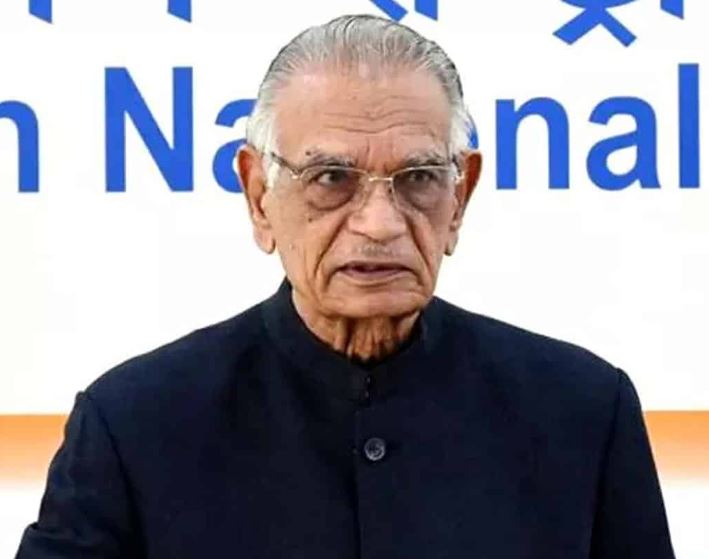
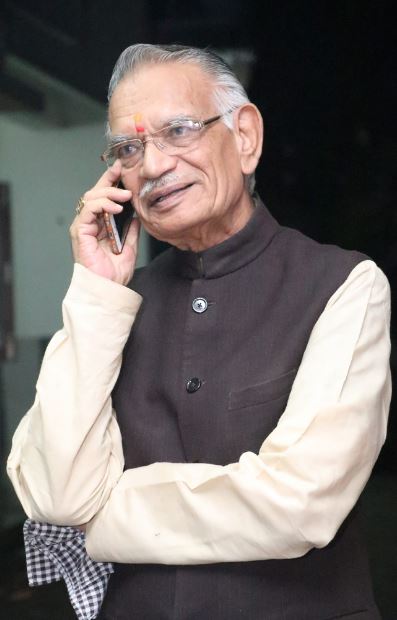
Shivraj Patil is an Indian politician and a member of the Indian National Congress (INC) who served as the tenth speaker of the Indian Parliament from 1991 to 1996. From 2004 to 2008, Patil served as the Minister of Home Affairs of India.
Patil grew up in a middle-class family in Latur, Maharashtra, India.
After obtaining a post-graduate degree in law, Shivraj began teaching law at a college. He did the job for around six months and then moved to his hometown Latur, where he started practising law. After a few years, he ventured into politics.
Shivraj Patil began his political career by joining the Indian National Congress (INC) in 1967. Subsequently, he was elected as the President of the Latur Municipality.
Elected as a Member of the Maharashtra Legislative Assembly for two consecutive terms (from 1973 to 1978 and from 1978 to 1980), Patil held various important positions like Chairman of the Public Undertakings Committee (1974-1975), Deputy Minister of Law & Judiciary, Irrigation, Protocol, Maharashtra (1975-1976), Deputy Speaker of the Maharashtra Legislative Assembly (1977-1978), and Speaker of the Assembly (1978-1979).
Shivraj Patil got elected to the seventh Lok Sabha in 1980. Subsequently, he was elected to the Lok Sabha for six consecutive terms, i.e., in 1984, 1989, 1991, 1996, 1998, and 1999. Patil contested the Lok Sabha elections again in 2004, but he lost to Rupatai Patil Nilangekar, a candidate of the Bharatiya Janata Party.
He served as the vice president of the Council of Scientific & Industrial Research (CSIR), New Delhi, from 1983 to 1986.
Inducted in the Indira Gandhi government as the Minister of State for Defence from 1980 to 1982 for the first time, Patil later went on to hold various ministerial posts like Minister of Commerce (independent charge) (
1982-1983), Minister of Science and Technology, Atomic Energy, Electronics, Space, and Ocean Development (1983-1984), Union Minister of State, Science and Technology, Space, Atomic Energy, Electronics, Ocean Development, and Bio-Technology (1984-1986), Union Minister of State, Personnel and Training, Public Grievances and Pensions and Administrative Reforms (1985), Minister for Defence Production, Minister of Civil Aviation and Tourism (independent charge) (1988-1989), and Minister of Home Affairs (2004-2008).
During his tenure as the speaker of the tenth Lok Sabha, Shivraj Patil did extraordinary work and took many initiatives which were applauded by various quarters. He was equally respected by both the parties- ruling and opposition. Patil has successfully helped defuse the tensions and ease the situation on several instances when Lok Sabha became tense and tumultuous. He is often admired for peacefully conducting the House during debates on various controversial issues like the criminalisation of politics and bank scams.
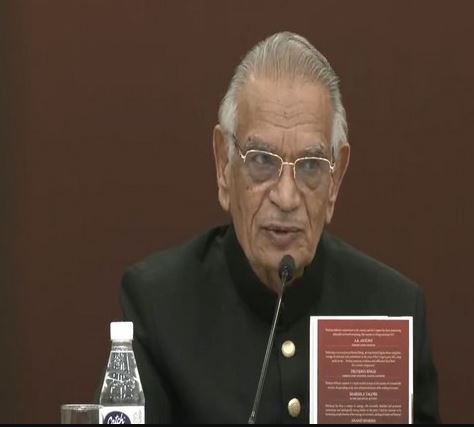
Shivraj Patil conducting a Lok Sabha session as the speaker
While Shivraj was the speaker of the Lok Sabha, the house discussed and rejected the first-ever motion for the impeachment of a sitting judge of the Supreme Court. Patil gave special attention to the case and consulted the matter with various parties and groups, ensuring that proper procedure was followed to consider the motion as it was a matter of great importance.
In 1993, Patil disqualified 20 members of the Lok Sabha by bringing in the provisions mentioned in the 10th schedule of the Constitution of India. While carrying out the disqualification process, Shivraj mentioned that to eliminate the threat of floor crossing, the anti-defection law included in schedule 10 of the Indian Constitution should have more logical sections.
During his tenure as the Speaker of Lok Sabha, he worked towards the growth of the Committee System of the Indian Parliament. On 31 March 1993, Patil, in a step towards making the Parliament more powerful in its exercise and control, formally integrated seventeen Departmentally-related Standing Committees of Parliament after discussing the matter with party leaders and Lok Sabha members. Although the matter was put up several times, in different Lok Sabhas and three Subject Committees were constituted in the eighth Lok Sabha, it was Patil who established the concept of Committees.
Shivraj also pushed the ongoing computerisation and modernisation efforts of the institutional arrangements of the Lok Sabha Secretariat. Working hard towards the computerisation of the information service to the Lok Sabha members, Patil ensured that various index-based databases of information were developed to provide objective, reliable, and authoritative data to Lok Sabha members on a regular basis. He also ensured the computerisation of a large number of Lok Sabha activities. Notebook Computers were made accessible to the Parliamentarians so that they could access instant and up-to-date information on various subject matters to effectively conduct their parliamentarian duties.
Considering his efforts to strengthen the Parliament, the Indian Parliamentary Group introduced an Outstanding Parliamentarian Award to be presented to a distinguished parliamentarian each year for his exemplary services to the Parliament.
During Shivraj’s tenure as the Speak of the Lok Sabha, India hosted four big international conferences- the 37th Commonwealth Parliamentary Conference in September 1991, the 89th Interparliamentary Conference in April 1993, the Sixth Commonwealth Parliamentary Seminar in January 1994, and the First Conference of the Association of SAARC Speakers and Parliamentarians, in July 1995.
Patil also granted two research fellowships (one each in Hindi and English), to selected scholars for undertaking original studies on subjects of parliamentary interest.
In spite of losing the 2004 Lok Sabha elections, Shivraj Patil was appointed as the Minister of Home Affairs in 2004. Extensively considered an ineffective minister, Patil’s journey as the Home Minister of India was impaired by several debacles. Starting from the 2006 Malegaon bombings at a Muslim graveyard, during his term, the country saw several terror attacks like the 2008 serial blasts in Delhi and the 26/11 Mumbai attack.
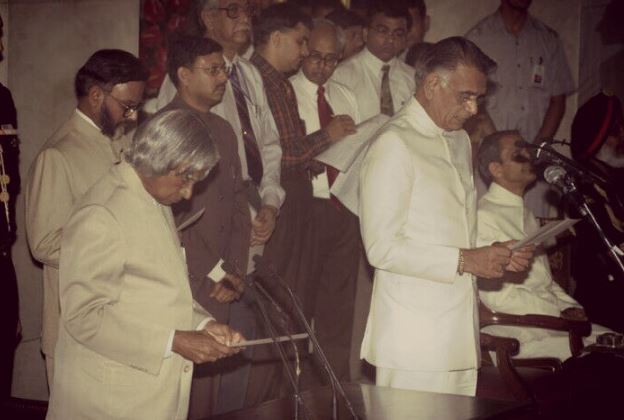
Shivraj Patil taking oath as the Home Minister of India in 2004 in the presence of the then President of India A.P.J. Abdul Kalam
In 2007, Patil was accused of mishandling the Nandigram Violence. Reportedly, despite repeated requests from the West Bengal government to send the Central Reserve Police Force to Nandigram to restore law and order in the area, Patil refused to do so. The violence further resulted in police firing and killing of men and women in Nandigram.
Four days after the 26/11 attack in Mumbai, on 30 November 2008, Shivraj resigned from his position as the Home Minister of India, taking moral responsibility for the security lapse that led to the attacks.
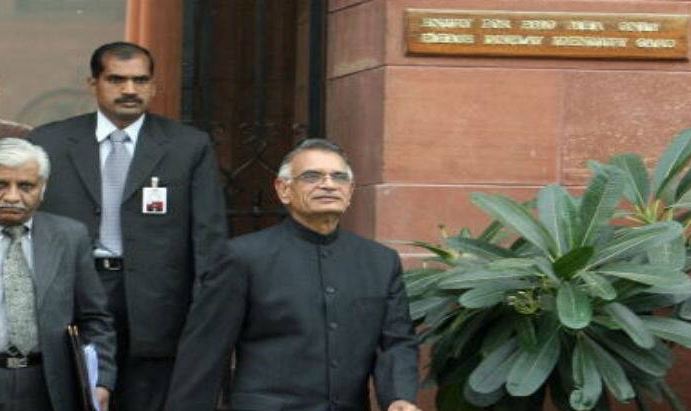
Shivraj Patil as the Home Minister of India
Two years later, in January 2010, Shivraj was appointed as the Governor of the Punjab and Chandigarh administrations. He served in the position for five years and resigned from it in 2015.
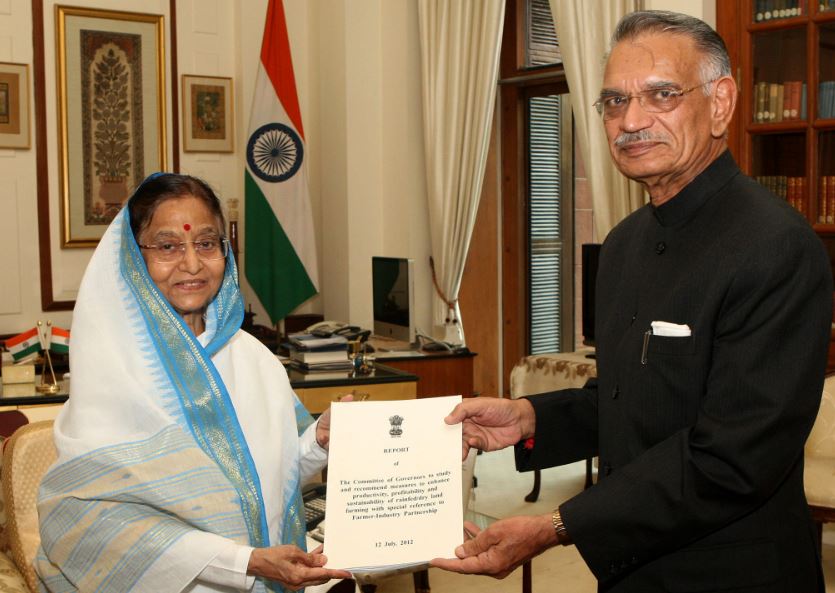
Shivraj Patil as the governor of Punjab presenting a report on Farmer-Industry Partnership to the then President of India Pratibha Patil
Besides being a politician Shivraj Patil is also an author. He has penned several books including Reminiscences and Reflections, Vision of India, Ecstasy and Agony of a Presiding Officer, Fragrance of inner self, and Dialogues. Patil has also penned an autobiography ‘Odyssey of My Life.’ Apparently, he was criticised for omitting to mention about the controversy that arose after the Delhi bombings in 2008 for changing his clothes thrice for public appearances on the night of the serial blasts.
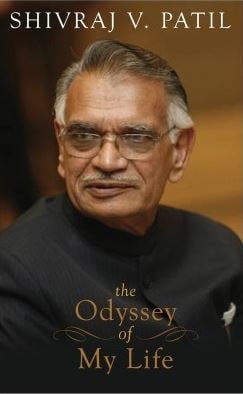
Shivraj Patil’s autobiography The Odyssey of My Life
In his spare time, Patil loves to read, write, swim, ride a horse, shoot, paint, and practise farming.
He has a deep faith in the Indian guru Sathya Sai Baba.
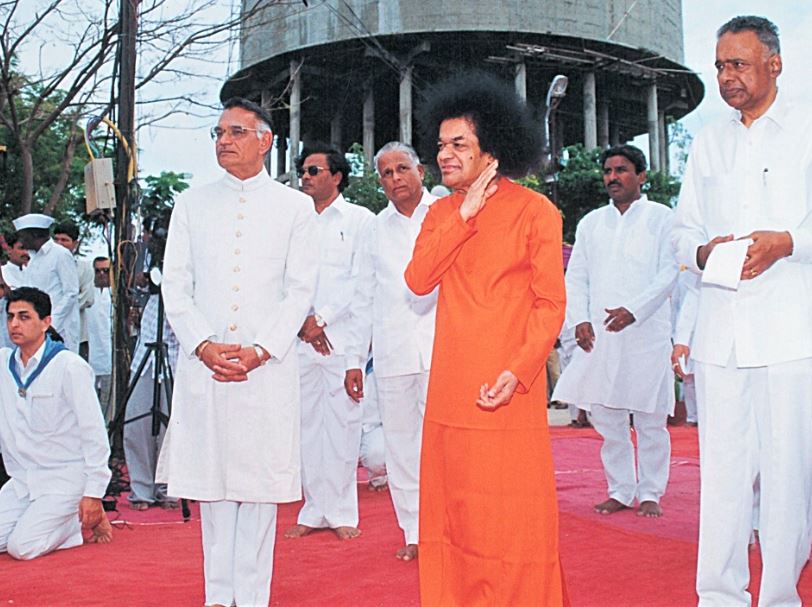
Shivraj Patil with Sathya Sai Baba
According to his Lok Sabha profile, Shivraj Patil is also an advocate, agriculturist, and professor of Law.
Shivraj Patil has the rare distinction of being unanimously elected as the speaker of the tenth Lok Sabha. check sources
BrandBharat.com
Shivraj Patil is often known among his fellow politicians for his fairness.
In 2007, Shivraj Patil was considered a suitable candidate for the presidential elections. However, his name was dropped by the party after the Left opposed his candidacy. Later, the name of Pratibha Patil
, the then Governor of Rajasthan was proposed for the position by Congress President Sonia Gandhi
. Later, Shivraj’s name was proposed for the position of the Vice President of India. check sources
The Economic Times
!
!
!
Narendra Modi Age, Height, Wife, Family, Caste, Biography & More
Narendra Modi Age, Height, Wife, Family, Caste, Biography & More
!
Pratibha Patil Age, Caste, Husband, Children, Family, Biography & More
Pratibha Patil Age, Caste, Husband, Children, Family, Biography & More
!
!
Om Birla Age, Caste, Wife, Children, Family, Biography & More
Om Birla Age, Caste, Wife, Children, Family, Biography & More
!
Somnath Chatterjee Age, Death Cause, Wife, Children, Family, Biography & More
Somnath Chatterjee Age, Death Cause, Wife, Children, Family, Biography & More
!
Murli Manohar Joshi Age, Caste, Wife, Children, Family, Biography & More
Murli Manohar Joshi Age, Caste, Wife, Children, Family, Biography & More