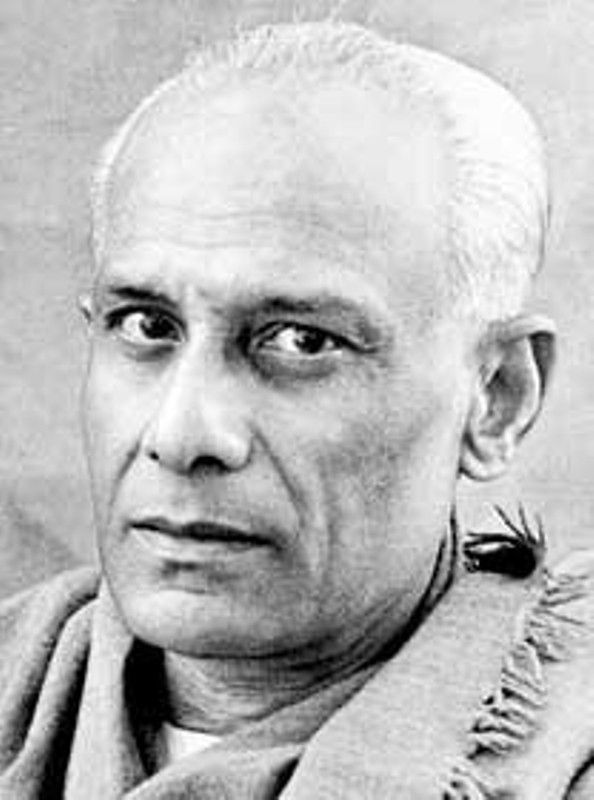
Who is Rabindranath Tagore?
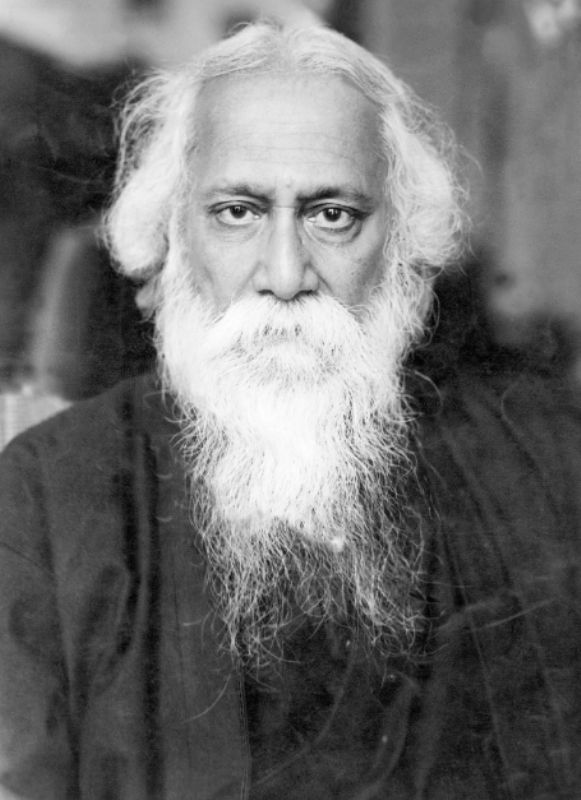
Rabindranath Tagore was an Indian polymath who is known for his works as a poet, playwright, novelist, short story writer, painter, spiritualist, lyricist, composer, singer, and as an artist, essayist, and educationist. In 1913, he won the Nobel Prize in Literature for his collection of poems titled Gitanjali.
Grew up in an affluent family
Rabindranath Tagore grew up in Jorasanko Thakur Bari, where his family members, predominantly poets, musicians, playwrights, and novelists, engaged actively in musical, literary, and dramatic activities.
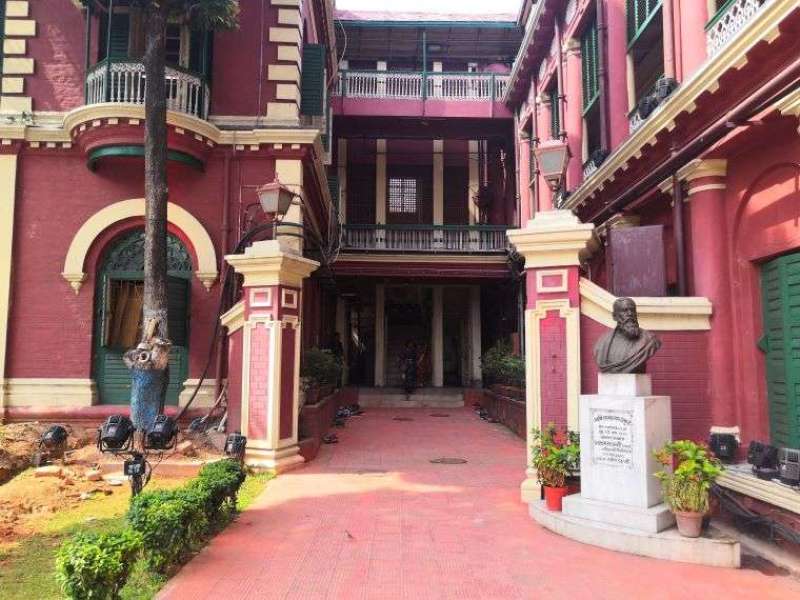
Jorasanko Thakur Bari, where Rabindranath Tagore grew up
His ancestors relocated from their hometown to Govindpur (now Gobindapur), one of three villages that eventually formed Calcutta (now Kolkata). Through their involvement in commerce and banking, they gathered considerable wealth, acquiring numerous properties in the region. It is believed that the Tagore family prospered due to the increasing influence of the British East India Company.
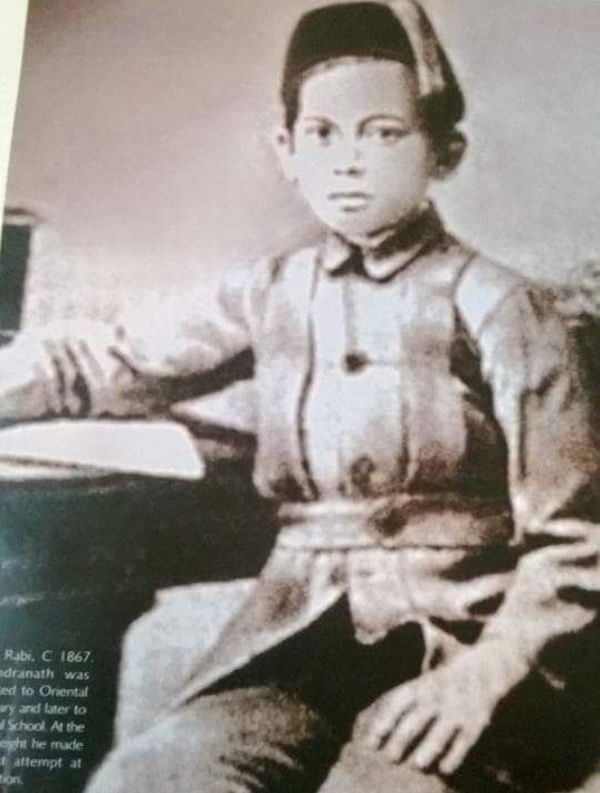
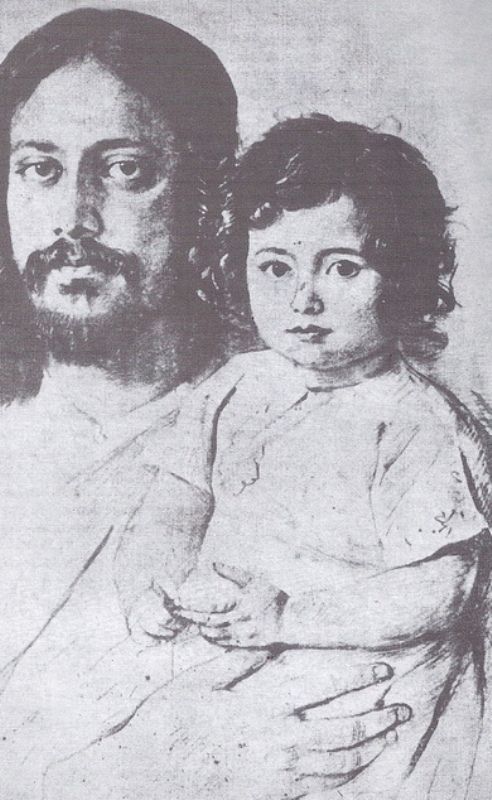
A childhood photo of Rabindranath Tagore clicked in 1867
An elite and educated family
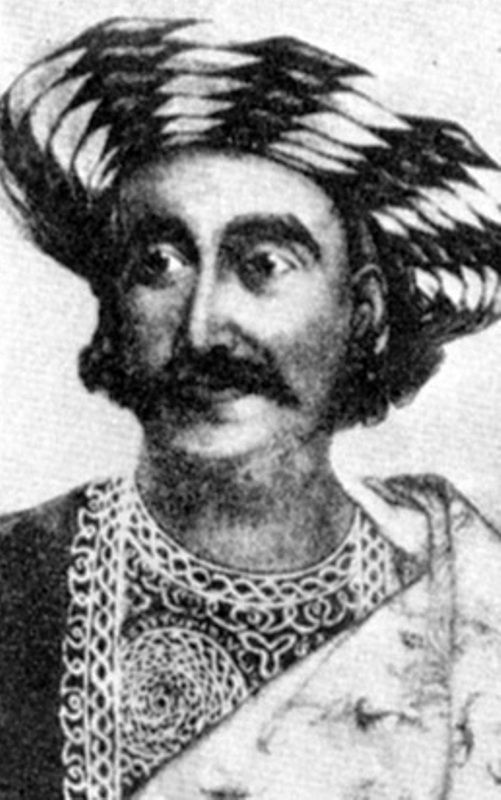
His father, Debendranath Tagore, was a Bengali thinker and spiritual expert who established the Brahmo religion in 1848. His father deeply studied European philosophy and was regarded as a prominent figure in the emerging era of Bengali society. Although deeply religious, he didn’t follow all the concepts of Hinduism, a characteristic later inherited by Rabindranath. His paternal grandfather, Dwarkanath Tagore, is recognized as among the initial Indian industrialists who played a crucial role in advancing the Bengal Renaissance. In 1828, Dwarkanath Tagore joined the nineteenth-century social and religious reformer Raja Rammohan Roy in the Brahma Samaj Movement, which aimed to reform Hindu society.
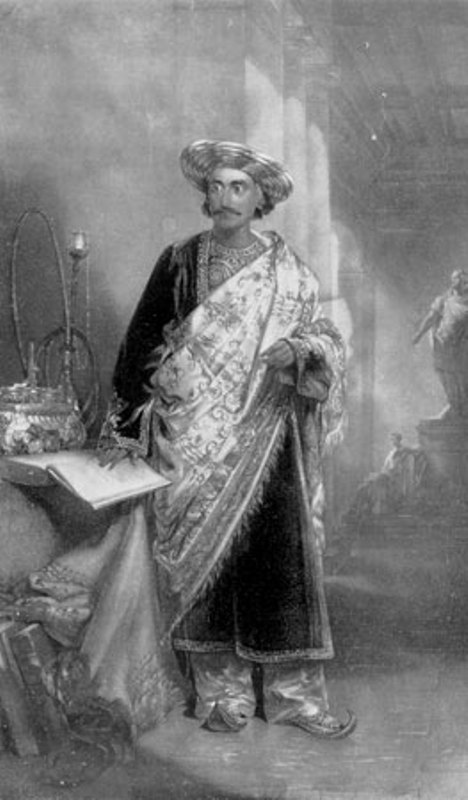
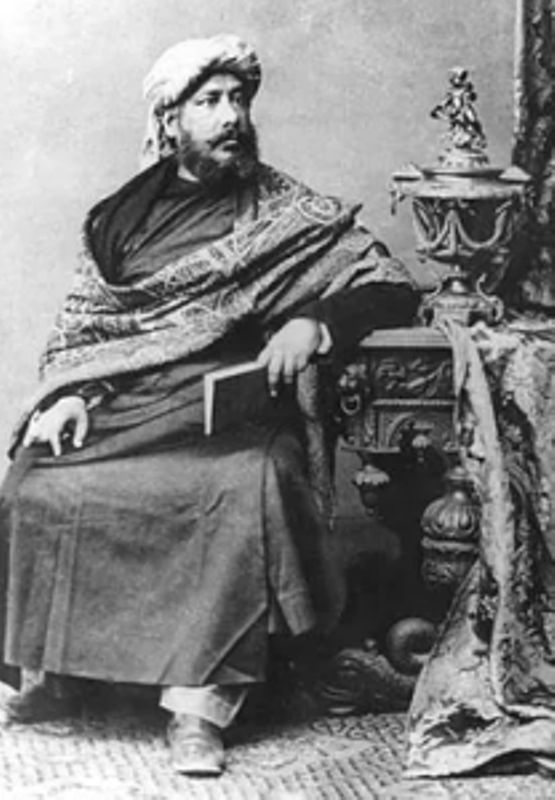
Rabindranath Tagore’s grandfather, Dwarkanath Tagore
Later, Debendranath Tagore, Rabindranath’s father, also became a participant in this movement and founded a meditation center named ‘Santiniketan’ (the Abode of Peace) on land situated approximately 100 miles away from Calcutta in 1863.
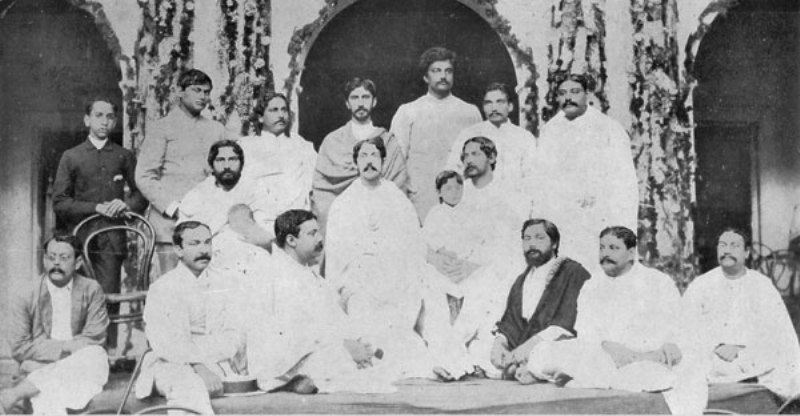
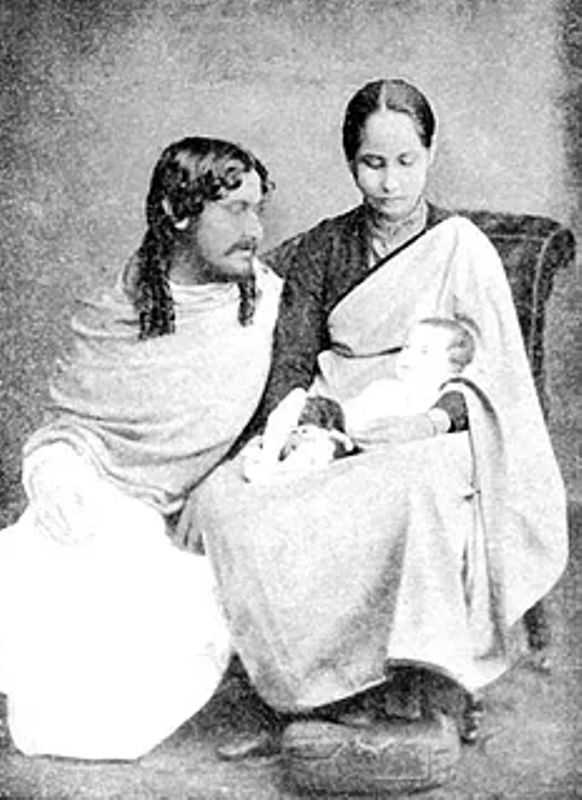
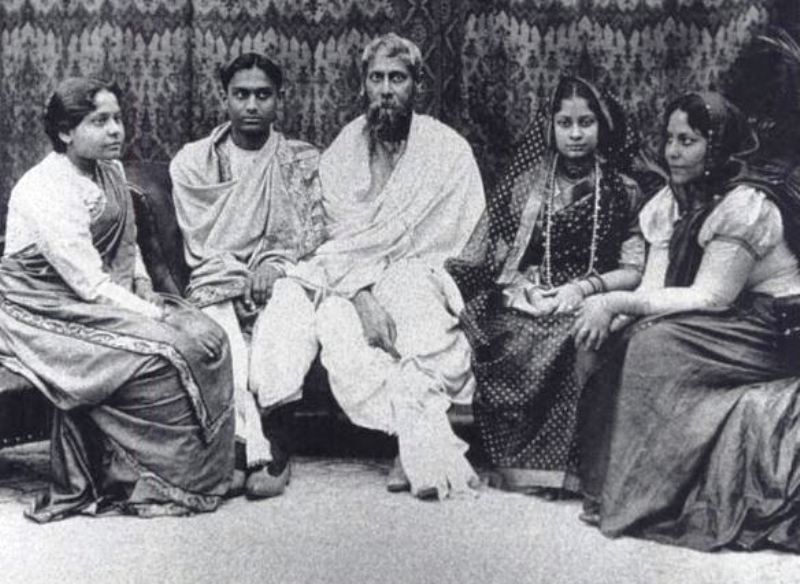
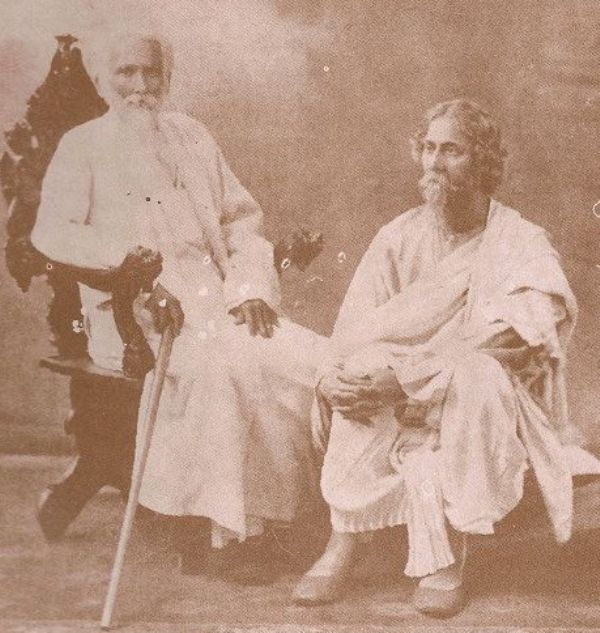
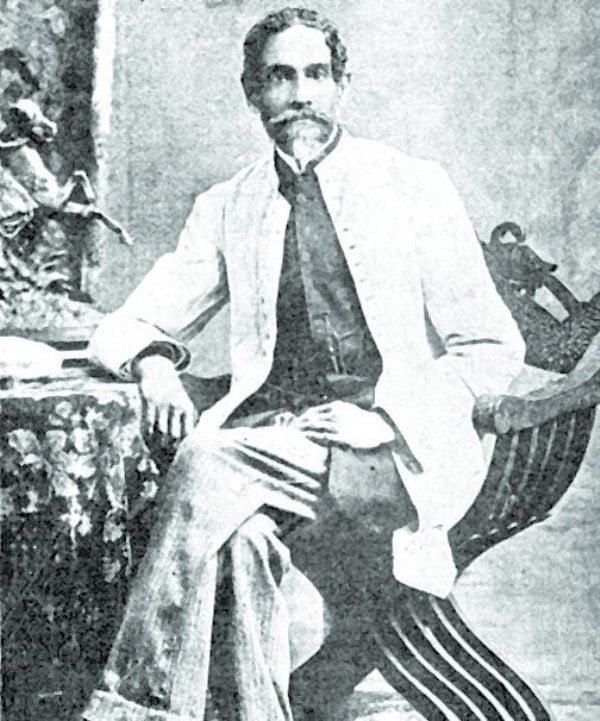
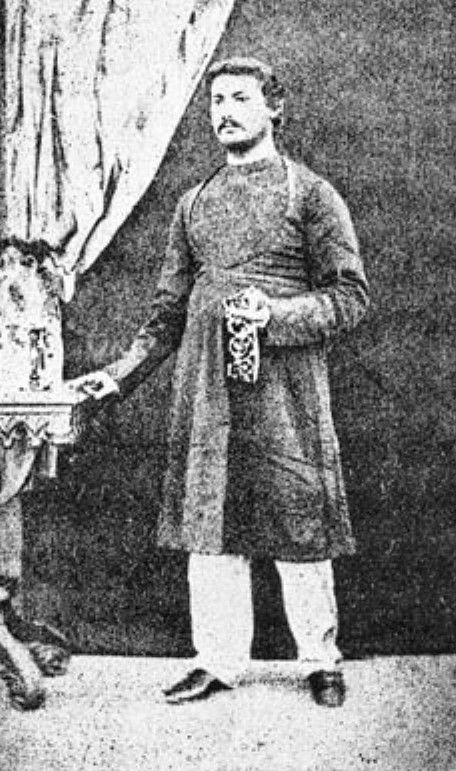
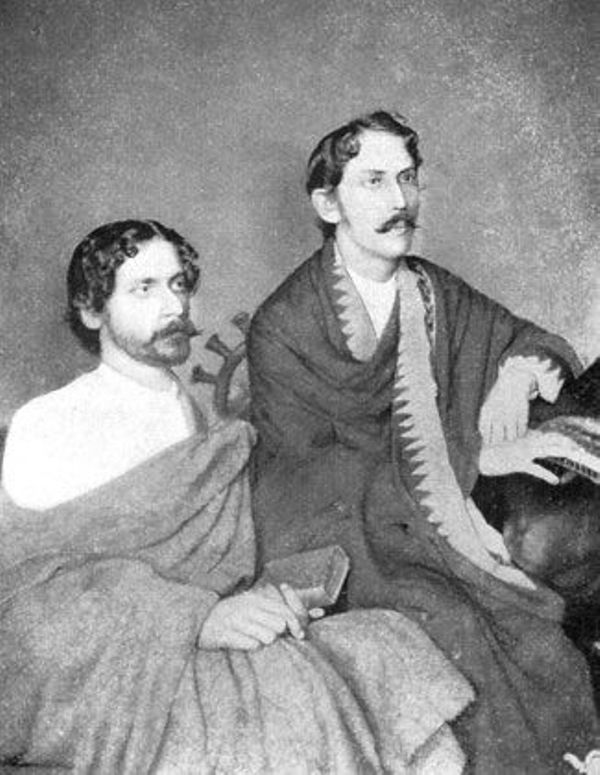
A rare photo of Rabindranath Tagore’s family
Rabindranath’s eldest brother, Dwijendranath, is credited with introducing shorthand and musical notations in Bengali. Dwijendranath also translated Kalidasa’s Meghdoot into Bengali. Satyendranath, Tagore’s second oldest brother is considered the first Indian member of the elite and formerly all-European Indian Civil Service. Hemendranath, Tagore’s third oldest brother, was a spiritual visionary and Yogi who made significant contributions to the evolution of modern Brahmoism, now known as the “Adi Dharm” religion. All his sisters were known for their beauty and education.
Upanayana (coming-of-age rite)
When Tagore turned eleven, he underwent his upanayana, a coming-of-age ceremony. Following this ritual in 1873, he travelled across various cities in India, such as Dalhousie and Amritsar. Tagore spent nearly a month in Amritsar, where he was deeply moved and influenced by the Gurbani and Nanak Bani at the Golden Temple. While mentioning his Golden Temple experience in his My Reminiscences (1912), Tagore wrote,
The golden temple of Amritsar comes back to me like a dream. Many a morning have I accompanied my father to this Gurudarbar of the Sikhs in the middle of the lake. There the sacred chanting resounds continually. My father, seated amidst the throng of worshippers, would sometimes add his voice to the hymn of praise, and finding a stranger joining in their devotions they would wax enthusiastically cordial, and we would return loaded with the sanctified offerings of sugar crystals and other sweets.” check sources
Mainstream Weekly
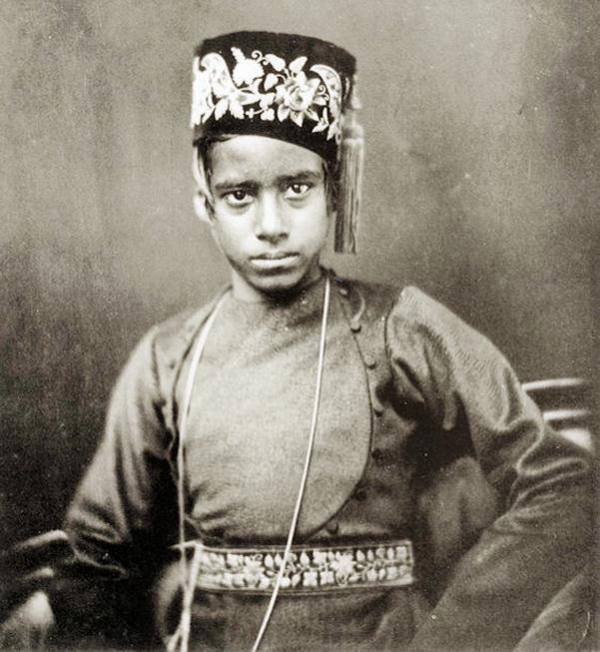
Rabindranath Tagore after his upanayana
Mostly home-tutored
During his upbringing, colonial authorities established primary schools in India. Tagore, coming from a rich Bengali family, received most of his education through private tutoring, a common practice among rich families at that time. check sources
Open Edition
He initially attended a Bengali-medium school founded by Iswar Chandra Vidyasagar, an eminent 19th-century Indian educator and social reformer. Tagore credited this institution for increasing his likeness to the Bengali language and literature. Despite briefly attending English-speaking schools, he never liked their instructional methods and showed no desire to be educated in a foreign language. Around the age of 14, Tagore began distancing himself from formal schooling, and he preferred a combination of home tutoring and self-study for his education and learned lessons in wrestling, music, and drawing from skilled professionals. He received lessons in Sanskrit, astronomy, and religious scriptures from his father, Debendranath, which laid the foundation for Tagore’s reformed religious beliefs.
London Days
In 1878, at 17 years old, Rabindranath Tagore went to London with the intention of preparing for either the Indian Civil Service or a legal career. Initially enrolled in a public school in Brighton, East Sussex, he resided in a house owned by the Tagore family near Brighton and Hove in Medina Villas. check sources
Hindustan Times
At University College, London, Tagore was exposed to British society and Western music, which he found enjoyable. However, he didn’t complete his studies in London, returning home after eighteen months. Back in India, he continued to refine his skills in creative writing and music. In 1940, Oxford University bestowed upon him an honorary doctorate. check sources
The Economic Times
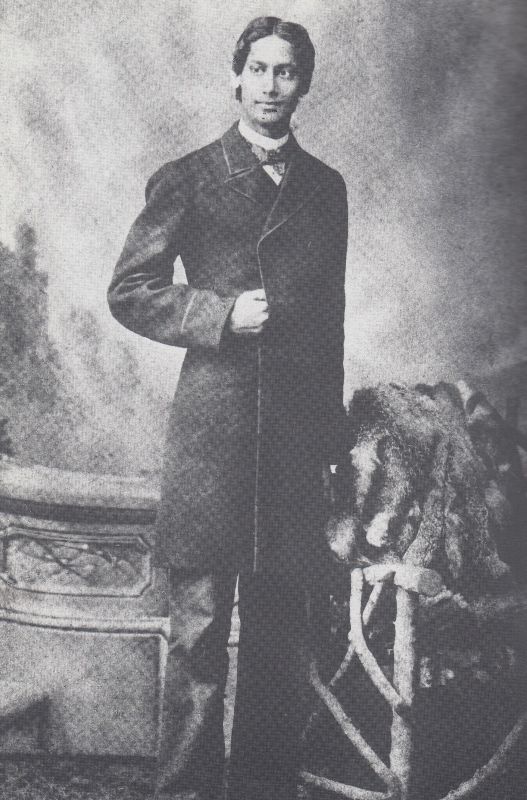
Rabindranath Tagore in England in 1879
A letter to his wife
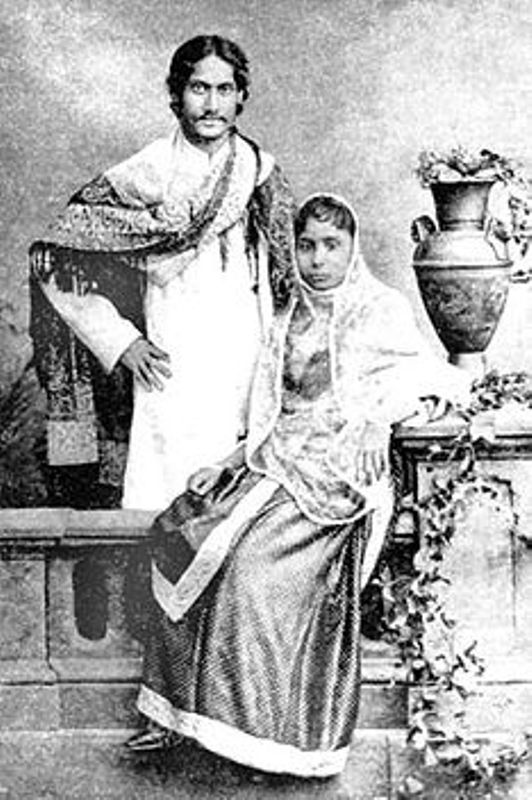
After 19 years of marriage, his wife, Mrinalini Devi, died. Tagore once wrote a letter to his wife, expressing his feelings for her. Tagore wrote,
If you and I could be comrades in all our work and in all our thoughts it would be splendid, but we cannot attain all that we desire.” check sources
The Economic Times
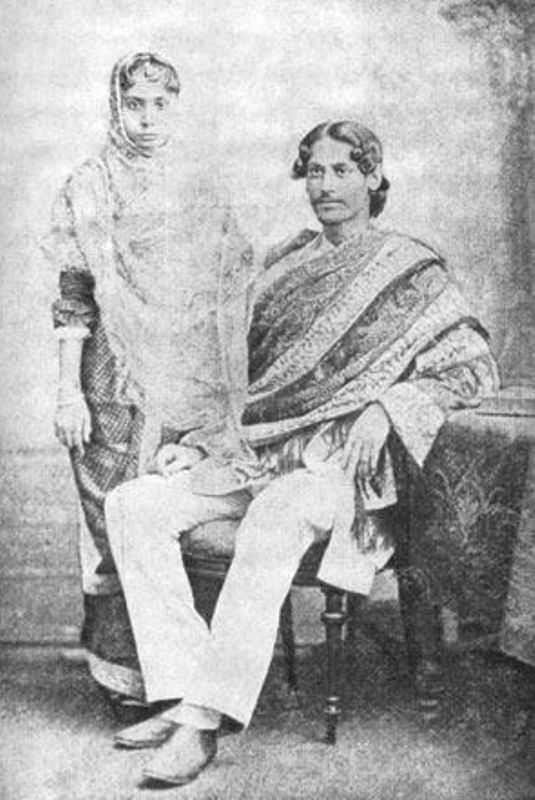
Rabindranath Tagore with his wife, Mrinalini Devi
Tagore and his daughters
Tagore’s first child, Madhurilata, also called “Bela,” was very beautiful, and she was, reportedly, the most dearly loved daughter to Rabindranath. Tagore, while admiring Bela, once said,
My eldest daughter Bela… was exceptionally beautiful in body and mind.” check sources
The Scottish Centre of Tagore Studies
Tagore’s daughter Renuka Tagore (1890-1904) died at the tender age of thirteen. Tagore shared a close bond with Renuka. When she fell ill with tuberculosis, he took her to the Himalayas in May 1903, seeking a healthier climate. The journey to the Himalayas was long and difficult. During this trip, Tagore composed numerous poems for children, later compiled and published as “Sisu” (The Child, 1903), which gained popularity under the title ‘The Crescent Moon.’ Tagore’s third and youngest daughter, Mira (1892-1962), also known as Atasi, had a troubled marriage due to her husband’s volatile temperament and addiction issues. Tagore once expressed regret over the choice of husband for his daughter Mira and said,
How can I be so cruel to Mira when it was I who had dealt the first blow in her life by marrying her off without thinking carefully enough about it? … There is a barbarity about Nagen which Mira has come to dread. … Her life is already destroyed, now it is for me to protect her and make her as happy as possible. I must bear as much pain for it as I can because I am responsible for her misery.” check sources
The Scottish Centre of Tagore Studies
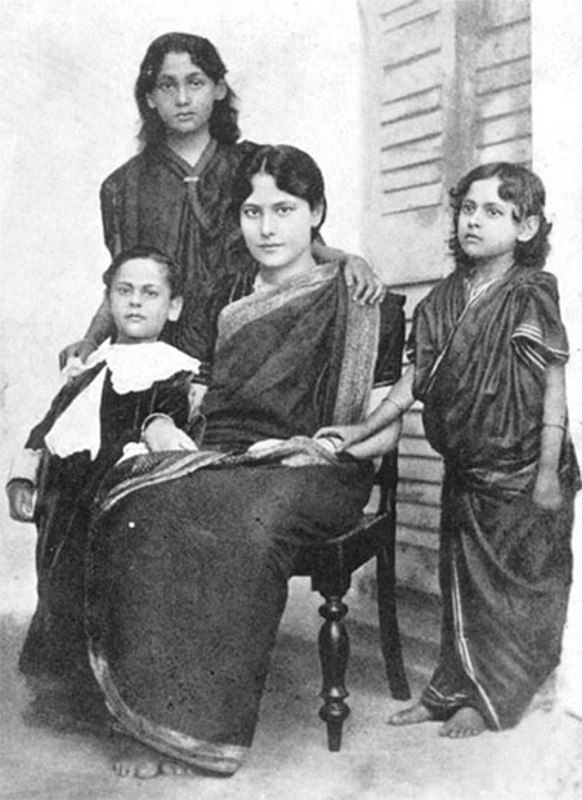
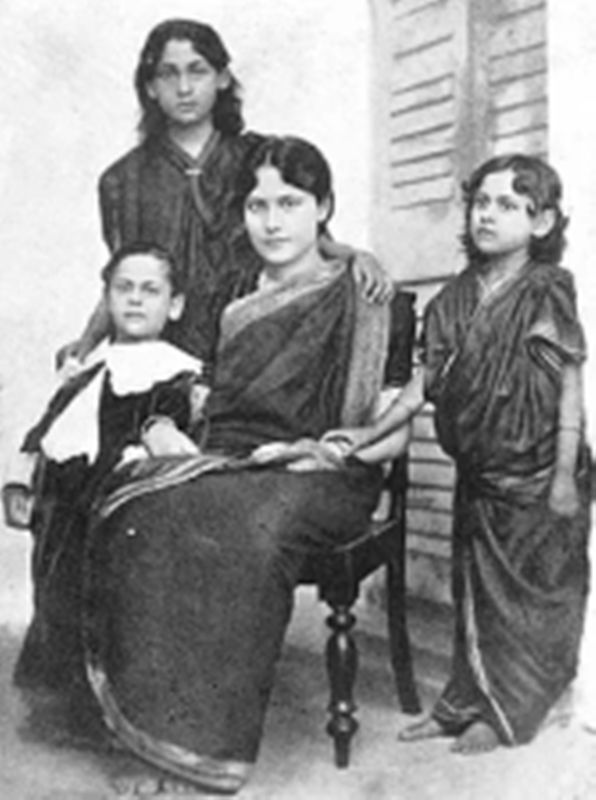
Rabindranath Tagore’s son Rathindranath Tagore (standing behind) and daughters Madhurilata Devi (Bela) (sitting on the chair), Mira Devi, and Renuka Devi
Tagore’s Muse
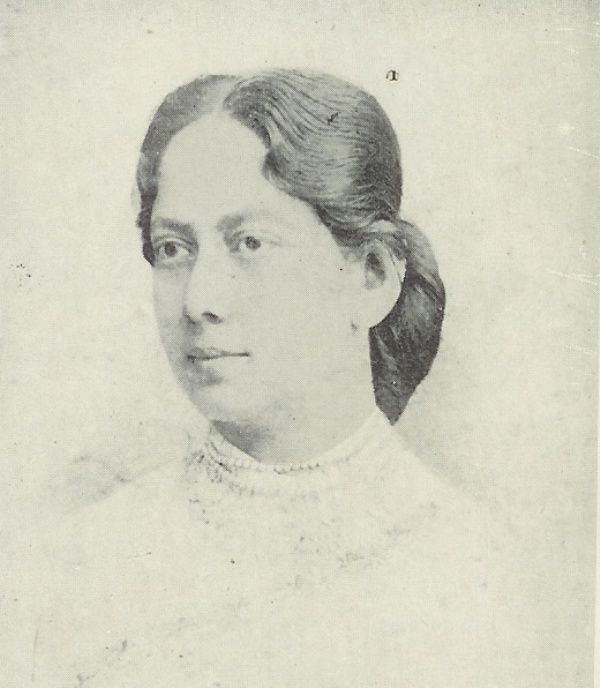
It is said that Kadambari Devi, who was married to Tagore’s elder brother Jyotirindranath, was his muse. Kadambari was two years younger than Tagore. The tale of their affection still holds a sense of mystery even today. In his renowned autobiography “Chelebela” (My Boyhood Days), Tagore described his initial encounter with Kadambari. He wrote,
A new bride came to the house, slender gold bracelets on her delicate brown hands…I circled around her at a safe distance, but I did not dare to go near. She was enthroned at the centre of affection and I was only a neglected, insignificant child …” check sources
Feminism in India
Despite lacking formal education, Kadambari reportedly had a better understanding of poetry than the poet himself. It’s believed that she played an important role in Tagore’s life. Kadambari served as the muse behind many of Tagore’s compositions, offering creative insights and feedback to him. Tagore affectionately nicknamed her after Hecate, the Greek goddess associated with the night, moon, and magic. 19 years old Tagore once dedicated his famous lyrics to Kadambari –
Tomarei koriachhi jibaner dhrubo tara (Thou art the guiding beacon of my life)” check sources
Feminism in India
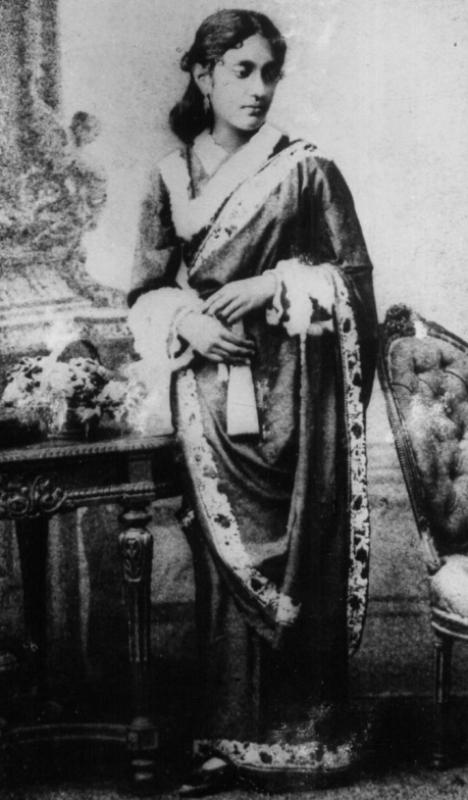
Kadambari Devi
On 21 April 1884, Kadambari died under mysterious circumstances, suspected to be a suicide. Her demise deeply shattered Tagore. Following her death, Tagore penned a letter to his trusted confidant C. F. Andrews, expressing his deep sorrow over the loss of Kadambari. Tagore wrote,
But where is the sweetheart of mine who was almost the only companion of my boyhood and with whom I spent my idle days of youth exploring the mysteries of dreamland? She, my Queen, has died and my world has shut against the door of its inner apartment of beauty which gives on the real taste of freedom.” check sources
Feminism in India
Later, Tagore wrote numerous poems and songs in Kadambari’s memory. In a popular Rabindra Sangeet lyrics, Tagore wrote,
Tobu Mone Rekho (Pray, love, remember)”
In another song that Tagore composed in Kadambari’s memory, he wrote,
Amaar praner pore chole gelo ke (The one who went out of my life)” check sources
Feminism in India
A romantic encounter
Rabindranath Tagore shared a brief romantic connection with an Argentine writer and intellectual, Victoria Ocampo (7 April 1890 – 27 January 1979). Victoria deeply admired Tagore’s literary works. In November 1924, while Tagore was on his way to Peru for independence centenary celebrations, he made a stop in Buenos Aires on 6 November 1924 due to health reasons. When Victoria got the news of Tagore’s visit to the city, she offered to care for him during his 58-day stay in the city during which Tagore became romantically involved with her. Victoria was undergoing a transition phase after her separation from her husband and during a love affair with her cousin. In the midst of this, Ocampo viewed Tagore as an Eastern spiritual guide who could illuminate her path forward. However, the 63-year-old widowed poet misunderstood the 34-year-old Ocampo’s devotion as a romantic interest. For Tagore, it was a form of affection he had long awaited to remove his intellectual loneliness. He expressed these sentiments in his poem “Shesh Basanth” (the last spring) that he wrote on 21 November 1924 during his stay as Ocampo’s guest. He wrote,
While walking on my solitary wayI met you at the dusk of nightfall
I was about to ask you take my hand
When I gazed at your face and was afraid
For I saw there the glow of the fire that lay asleep
In the deep of your heart’s dark silence”
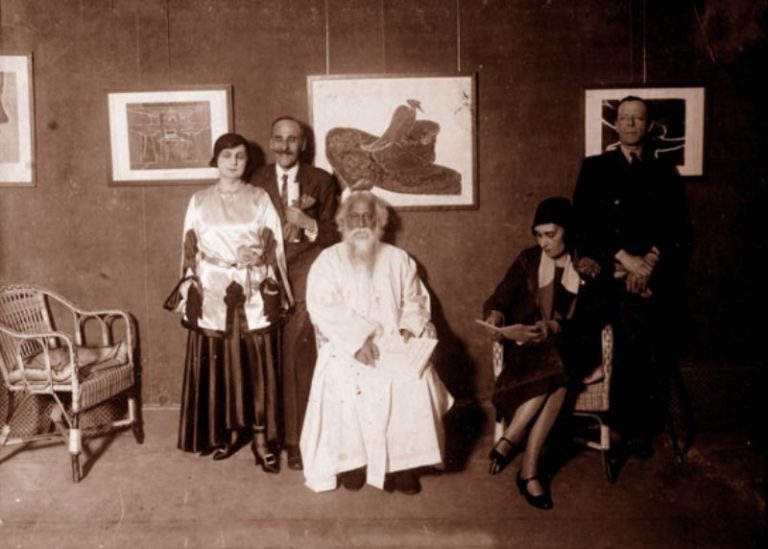
Rabindranath Tagore and Victoria Ocampo (both sitting)
While describing Tagore’s advances in her autobiography, Ocampo wrote,
One afternoon, as I came into his room while he was writing, I leaned towards the page which was on the table. Without lifting his head towards me he stretched his arm, and in the same way as one gets hold of a fruit on a branch, he placed his hand on one of my breasts. I felt a kind of shudder of withdrawal like a horse whom his master strokes when he is not expecting it. The animal cried at once within me. Another person who lives inside me warned the animal, ‘ be calm… fool’ It is just a gesture of pagan tenderness. The hand left the branch after that almost incorporeal caress. But he never did it again. Every day he kissed me on the forehead or the cheek and took one of my arms, saying “such cool arms.”
Victoria Ocampo presented Tagore with an armchair to bring back to India from Buenos Aires. Tagore regularly used this chair during his stay as Ocampo’s guest for approximately two months, from November to December 1924. The chair remains preserved in Shantiniketan. According to reports, in his final years, Tagore often found solace in that chair, and in April 1941, he even composed a poem about it. Tagore wrote,
Yet again, if I can, will l look for that seatOn the top of which rests, a caress from overseas
I knew not her language
Yet her eyes told me all
Keeping alive forever
A message of pathos”
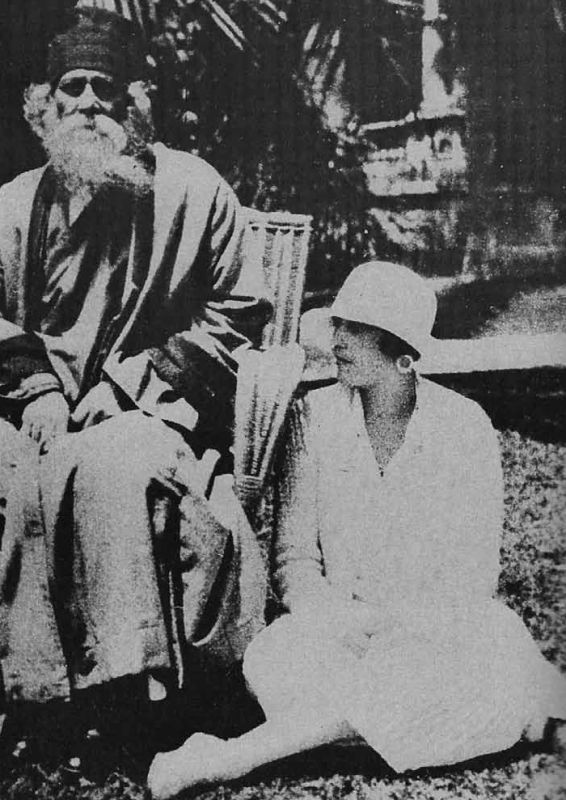
Rabindranath Tagore sitting on the armchair gifted by Victoria Ocampo
On Tagore’s demise, Ocampo dispatched a telegram to Tagore’s son, conveying the message ‘Thinking of him’ (pensando en él), which served as the inspiration for the title of the 2018 Argentine film ‘Thinking of Him.’ The film depicts the connection and relationship shared between Rabindranath Tagore and Victoria Ocampo.
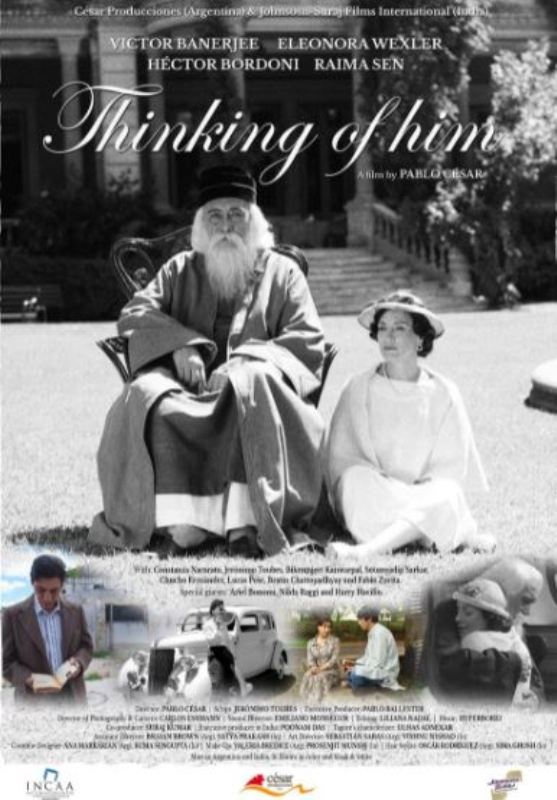
Thinking of Him film poster
Early literary works
The rich cultural and literary environment in the Tagore family encouraged Rabindranath to start writing poetry at a very young age. Initially, he published numerous poems, some anonymously and others under his pen name “Bahanusingha.” Tagore soon began contributing to various Bengali publications, such as “Balak” and “Bharati.” He wrote his first short story titled “Bhikharini” (The Beggar Woman) in 1877, which is considered the first Bengali-language short story. In 1882, Tagore published Sandhya Sangeet, a volume of Bengali verse that included his famous poem Nirjharer Swapna Bhanga (The awakening of the fountain). From 1884 to 1890, he wrote many poems, prose articles, criticism, plays, and novels.
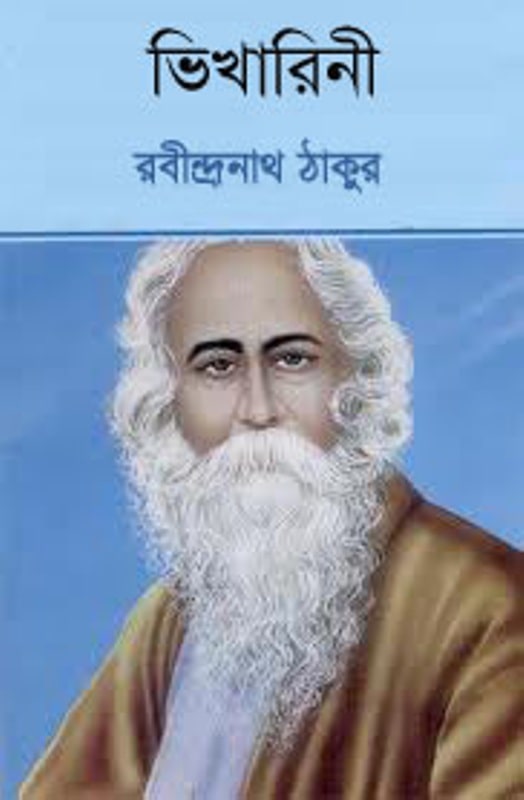
Bhikharini by Rabindranath Tagore
Shelaidaha (1878–1901) Days
In 1890, Tagore made his second visit to the United Kingdom but returned within a month to look after the family estate, Kuthibari, a three-story pyramid-shaped terraced bungalow set within eleven acres of land in Shelaidaha (now part of Bangladesh). It was during this time that he gained a close understanding of the harsh life suffered by the poor Bengali peasants. Tagore’s wife and children later joined him at Shelaidaha in 1898. His stay there exposed him deeply to the social, political, and economic hardships faced by the peasants. Tagore expressed his observations of the peasants’ suffering in an article in which he wrote,
Our so-called responsible classes live in comfort because the common man has not yet understood his situation. That is why the landlord beats him. The money-lender holds him in his clutches; the foreman abuses him; the policeman fleeces him; the priest exploits him; and the magistrate picks his pocket.”
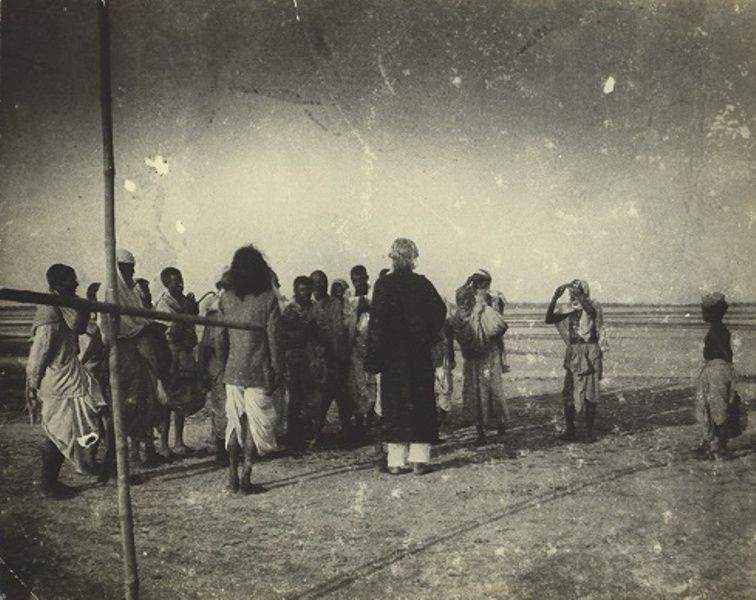
Rabindranath with his tenant farmers in Shelaidaha
While looking after his family’s inherited property in Shelaidaha, Rabindranath Tagore recognized the potential for transforming rural life through education and cooperation. He once spoke on ‘The Vicissitudes of Education’ and strongly favoured using the mother tongue. During this period, he heavily experimented with various teaching methods. Soon, Tagore established his own school in Shelaidaha, enrolling his own children and employing several skilled teachers, including an Englishman instructing in the English language. check sources
Tagore’s School and Methodology by Thomas B. KANE, Edinburgh Napier University
He also established co-operatives and healthcare facilities in the villages of his family estate and introduced innovative farming techniques.
Most productive phase
Amidst the rural reforms in Shelaidaha, Tagore continued his writing. The lush landscapes, flowing rivers, and simplicity of rural Bengal inspired him to compose numerous renowned essays, short stories, and poems, such as “Sonar Tori,” “Kotha o Kahini,” “Chitra,” and “Chaitali.” In 1890, he released “Manasi,” a collection of poems that stands as one of his most acclaimed literary works.
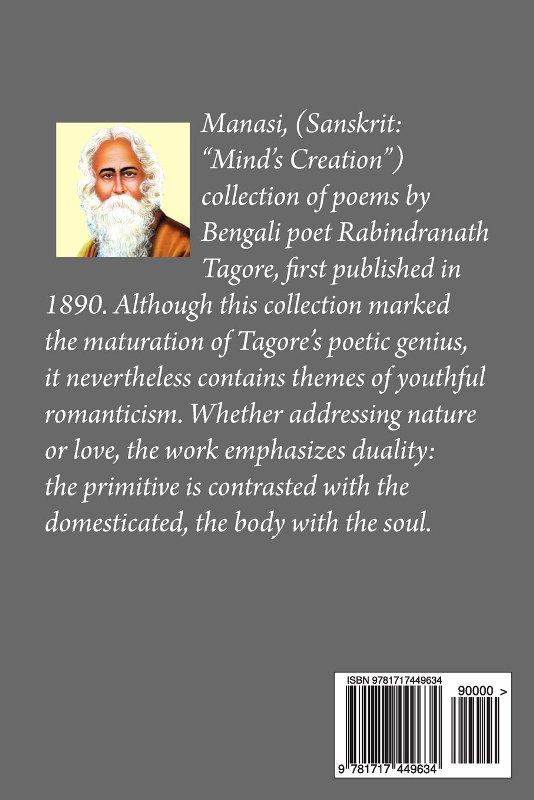
Manasi by Rabindranath Tagore
In 1900, he published his masterpiece Galpaguchchha, a three-volume composition of 84 stories.
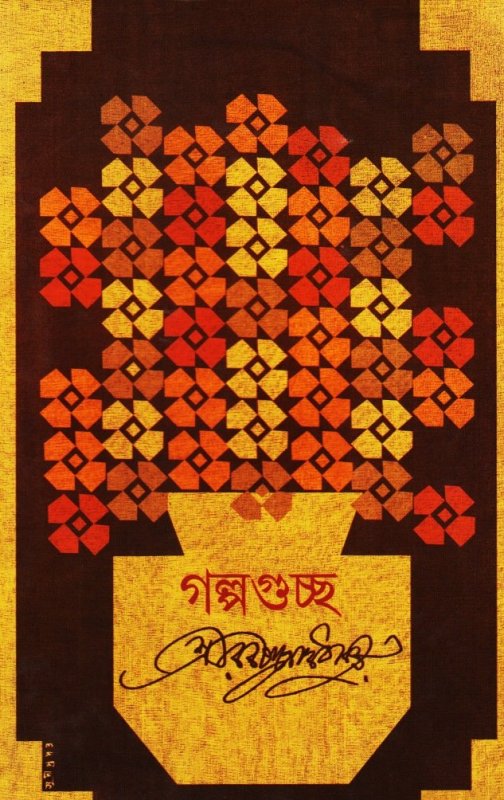
Hardcover of Galpaguchchha by Rabindranath Tagore
During this phase, he corresponded extensively with his niece by writing letters to her, resulting in the publication of collections titled “Chhinnapatra” (Torn letters) and “Chhinnapatravali” (A collection of torn letters). The majority of poems from “Kheya” and “Naibedya,” along with numerous songs featured in “Gitanjali” and “Geetimalya,” were composed during his stay in Shelaidaha, where he also did the English translation of “Gitanjali” in 1912. check sources
National Herald
These literary works are regarded as landmarks in Bengali prose. Tagore himself described the period between 1891 and 1895 as his ‘Sadhana,’ marking it as his most productive phase. While residing in Shelaidaha, Tagore utilized the family boat, Padma, to navigate the Padma River, visiting villages to collect nominal rents. Engaging with villagers during these visits helped him understand their concerns, an experience that helped him in his later educational experiments.
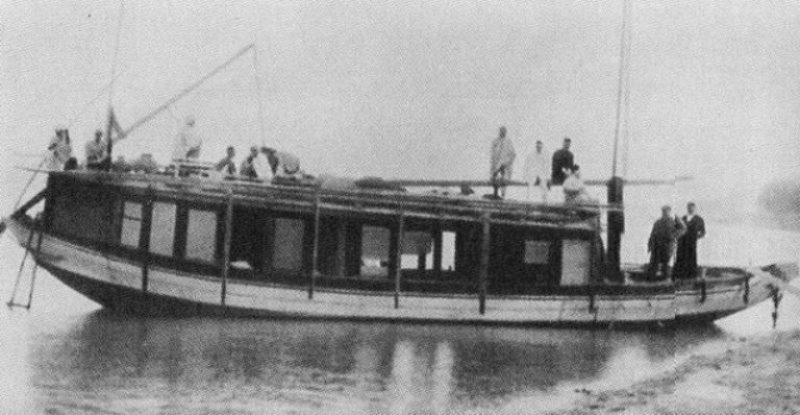
Tagore family boat, Padma
Brahamacharyashram: A boarding school
In 1901, Tagore moved from Shelaidaha to settle in Santiniketan, establishing the Brahamacharyashram (or Ashram) School. Beginning with a handful of students, including his own son, the school aimed to develop close connections between teachers and pupils. Tagore chose not to charge any fees, personally bearing all financial responsibilities.
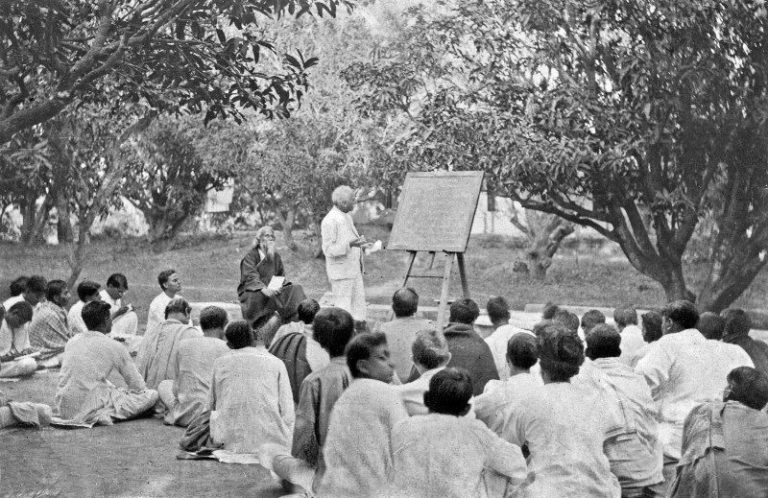
Rabindranath Tagore (seated, to the left of man at blackboard) at an open-air classroom, Shantiniketan, West Bengal
Literary work at Santiniketan
During his stay in Santiniketan, Tagore wrote about India’s history including the stories of noble self-sacrifice. It was during this phase that he wrote some of his widely acclaimed realistic novels like “Choker Bali” (1901), “Naukadubi” (1903), and “Gora” (1910).
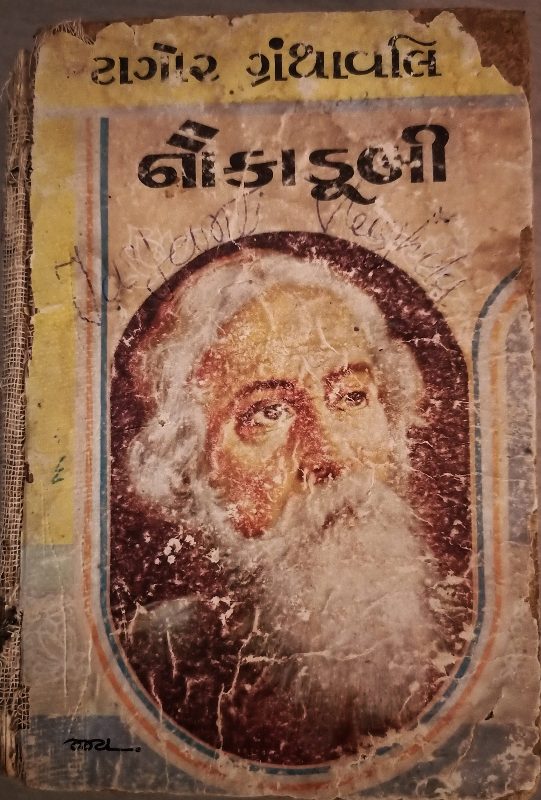
The cover of Naukadubi by Rabindranath Tagore
Nobel Prize
The noted English painter Sir William Rothenstein and poet W.B. Yeats were deeply impressed by Tagore’s poems and writings, previously translated into English. During his third trip to the United Kingdom in 1912, Tagore gained recognition as a distinguished poet and intellectual. In November 1913, Rabindranath Tagore received the Nobel Prize in Literature for “Gitanjali,” his most renowned poetry collection, making him the first Asian and non-European to receive this prestigious award. The Swedish Academy, in its statement, said,
The Nobel Prize in Literature 1913 was awarded to Rabindranath Tagore “because of his profoundly sensitive, fresh and beautiful verse, by which, with consummate skill, he has made his poetic thought, expressed in his own English words, a part of the literature of the West.”
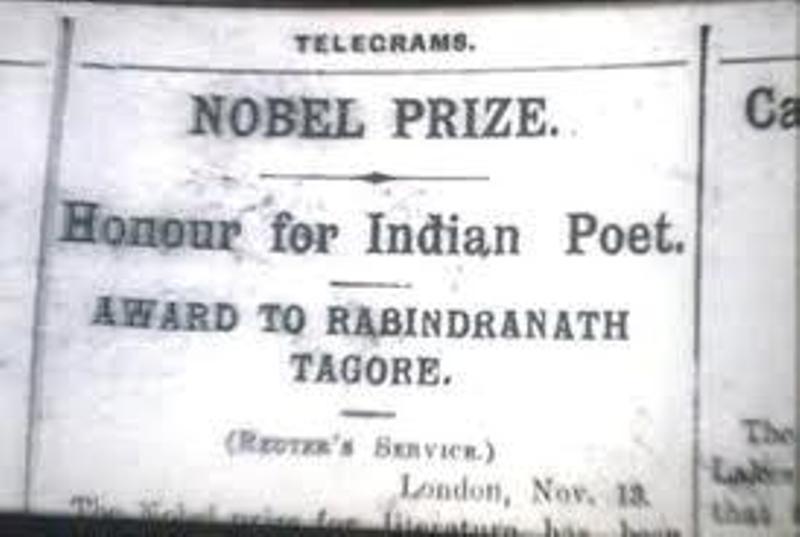
A newspaper cutting about Rabindranath Tagore winning the Nobel Prize in Literature in 1913
When Gitanjali was lost
During his second trip to London, the Gitanjali manuscript went missing while Tagore was on his way to show the English translation to William Rothenstein, hoping to persuade William Butler Yeats to write an introduction. Tagore took the Tube to Rothenstein’s Hampstead home and lost the briefcase containing the manuscript along the way. After his son Rathindranath contacted the London Tube authorities, the briefcase was found, and Gitanjali went on to win India’s first Nobel Prize. check sources
The Hindu
When his Nobel prize was stolen
On 25 March 2004, Tagore’s Nobel Prize was stolen from the secure vault at Visva-Bharati University following which the Swedish Academy issued two duplicates of Tagore’s Nobel Prize. In 2016, the stolen Nobel Prize was found after a baul singer named Pradip Bauri, who was accused of providing shelter to the thieves, was arrested. check sources
The Hindu
A Bengali-language film titled Nobel Chor was released in 2012, which was inspired by the theft of Tagore’s Nobel Prize.

Nobel Chor film
Knighthood
In the Birthday Honours of 1915, King George V bestowed a knighthood upon Rabindranath Tagore. However, following the Jallianwala Bagh massacre in 1919, Tagore gave up this honor by addressing a letter to Lord Chelmsford, the British Viceroy of India at that time. Tagore wrote,
The disproportionate severity of the punishments inflicted upon the unfortunate people and the methods of carrying them out, we are convinced, are without parallel in the history of civilised governments…The time has come when badges of honour make our shame glaring in their incongruous context of humiliation, and I for my part wish to stand, shorn of all special distinctions, by the side of my country men.”
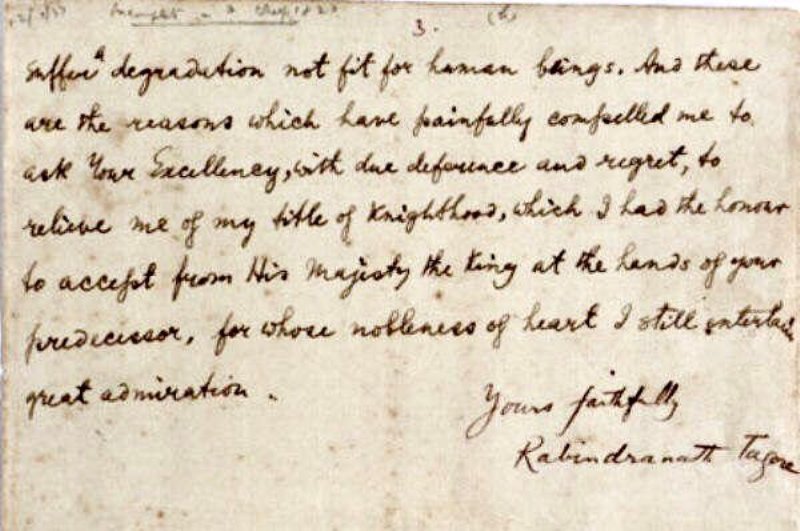
Rabindranath Tagore wrote a letter to Lord Chelmsford to return his Knighthood conferred on him by British Government
Visva Bharati University
In 1916, Tagore went to Japan and the United States, delivering lectures that were later published in two volumes titled “Nationalism” (1917b) and “Personality” (1917c). Between 1878 and 1932, Tagore travelled across more than thirty countries, covering five continents. These global experiences influenced his vision to establish an institution gathering the world’s cultures and knowledge systems in one place. On 24 December 1918, he laid the foundation stone of Visva Bharati in Shantiniketan, West Bengal, which evolved into an international hub for cultural exchange and humanistic studies.
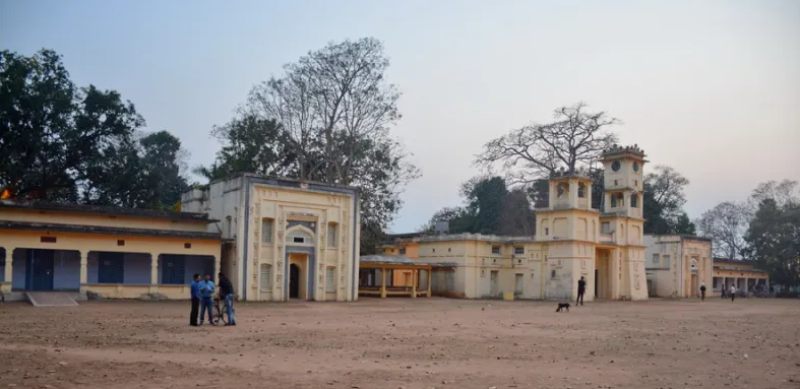
Rabindranath Tagore’s Visva Bharati University
Sri Niketan: Tagore’s dream project
Between 1901 and 1921, Santiniketan experienced significant growth. However, Tagore aimed to introduce a different educational approach for rural Indian children centered on rural living. In 1921, Tagore collaborated with agricultural economist Leonard Elmhirst to establish a new school named Shikshasastra at Sri Niketan in Surul. This institution’s primary focus was to provide an all-round education to village children, mainly agricultural research. At Sri Niketan, handicrafts played an important role, where every student had to learn a specific trade. Later, the entire programme followed at Sri Niketan for rural development was adopted by India’s five-year plans.
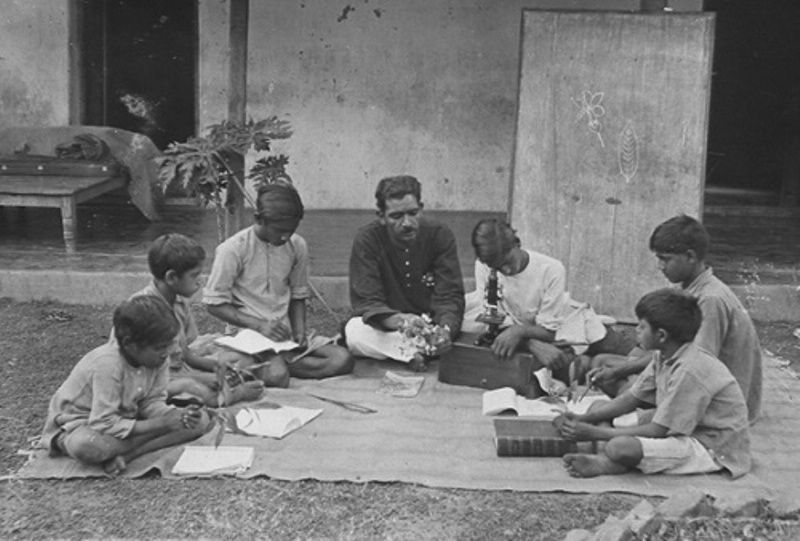
A boy studying the microscope at the Sri Niketan school
Mahatma and Gurudev
Rabindranath Tagore and Mahatma Gandhi
, two prominent figures of Modern India, held a deep mutual respect. They are famously identified as “Mahatma” (a title given to Gandhi by Tagore) and “Gurudev” (a title given to Tagore by Gandhi). Tagore reportedly coined the term “Mahatma” for Gandhi, and in response, Gandhi referred to Tagore as “Gurudev.” Charles Freer Andrews, an Englishman, served as the bridge connecting these two personalities. When Mahatma Gandhi returned to India, Andrews proposed that Tagore invite members of Gandhi’s “Phoenix family” to Santiniketan. In March 1915, Mahatma Gandhi and Rabindranath Tagore met for the first time at Santiniketan.
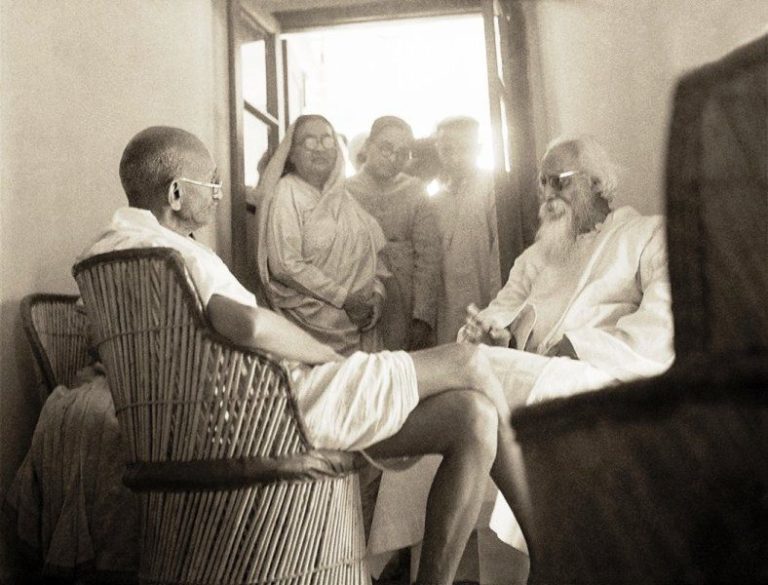
Rabindranath Tagore and Mahatma Gandhi at Santiniketan in March 1915
Later, they met on various occasions during which they would discuss various things, from politics and philosophy to food and diet. Mahatma Gandhi was a strict fruitarian, and he once told Tagore,
To fry bread in ghee or oil to make puris is to turn good grain into poison. It must be a slow poison.”
Tagore responded,
I have been eating puris all my life and it has not done me any harm so far.” check sources
mkgandhi.org
Despite their close bond, both Tagore and Gandhi held different views on science, social and economic progress, nationalism, and patriotism. check sources
The Economic Times
Tagore had doubts about Mahatma Gandhi’s Non-cooperation Movement and disagreed with Gandhi’s philosophy concerning the “Charkha.” Tagore also criticized Gandhi for linking the Bihar earthquake to the sin of untouchability. Gandhi always received Tagore’s criticisms positively, and despite their differences, they maintained mutual respect. While talking about his differences with Tagore, Mahatma Gandhi once said,
I started with a disposition to detect a conflict between Gurudev and myself, but ended with a glorious discovery that there was none.” check sources
mkgandhi.org
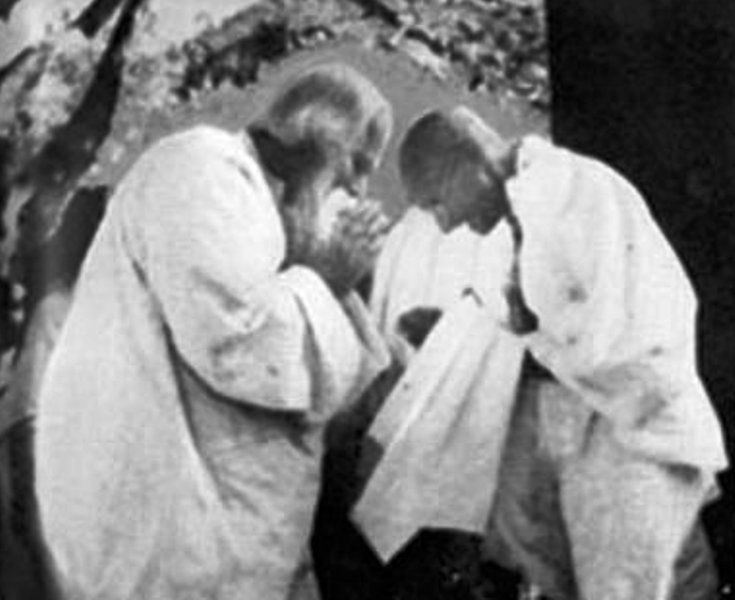
Rabindranath Tagore and Mahatma Gandhi greeting each other
In 1940, Mahatma Gandhi’s visit to Santiniketan along with his wife, Kasturba, proved to be his last meeting with Tagore during which Tagore requested Gandhi to take Santiniketan under his protection to which Gandhi replied,
Who am I to take this institution under my protection?… It carries God’s protection because it is the creation of an earnest soul.” check sources
mkgandhi.org
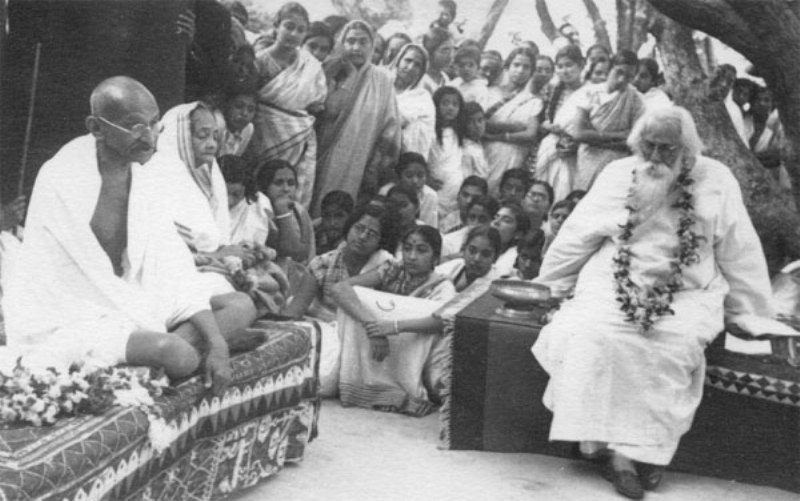
Rabindranath Tagore with Mahatma Gandhi and Kasturba at Santiniketan
In 1945, Mahatma Gandhi made his last visit to Santiniketan; however, Tagore was not present to welcome him as Tagore had passed away in 1941. While addressing the Santiniketan community, Mahatma Gandhi said,
It is my conviction arrived at after a long and laborious struggle that Gurudev as a person was much bigger than his works; bigger even than this institution.” check sources
mkgandhi.org
International Travles
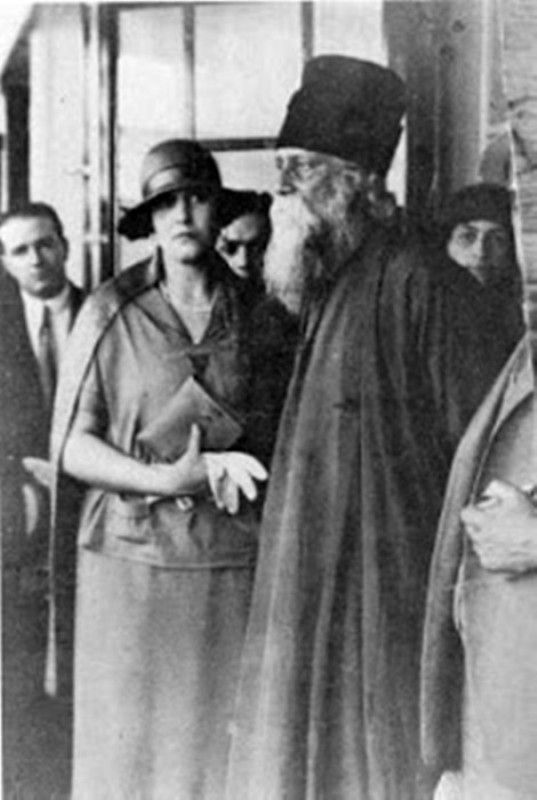
Throughout his international travels, from 1878 to 1932, Tagore interacted with many intellectuals including Mussolini (in May 1926), Henri Bergson, Albert Einstein (in April 1930), Robert Frost, Thomas Mann, George Bernard Shaw, H.G. Wells, and Romain Rolland.
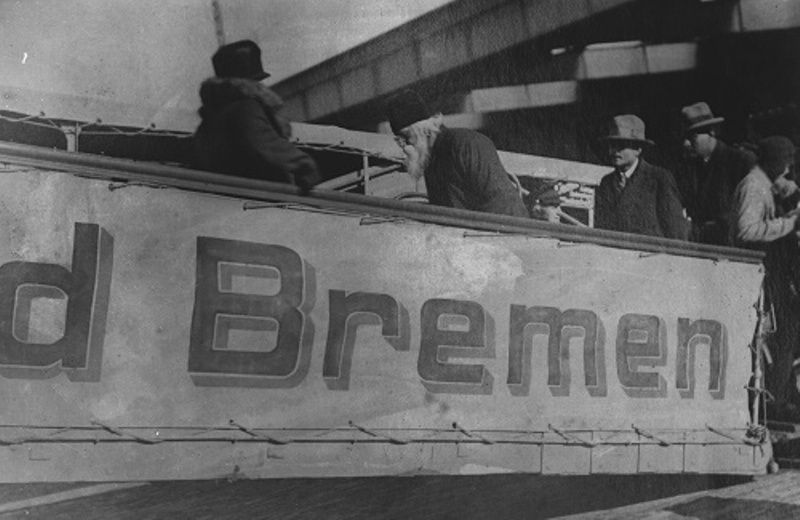
Rabindranath Tagore travelling in Europe
On 14 April 1930, Albert Einstein
interviewed Tagore during which Tagore said,
Our passions and desires are unruly, but our character subdues these elements into a harmonious whole. Does something similar to this happen in the physical world? Are the elements rebellious, dynamic with individual impulse? And is there a principle in the physical world which dominates them and puts them into an orderly organization?”
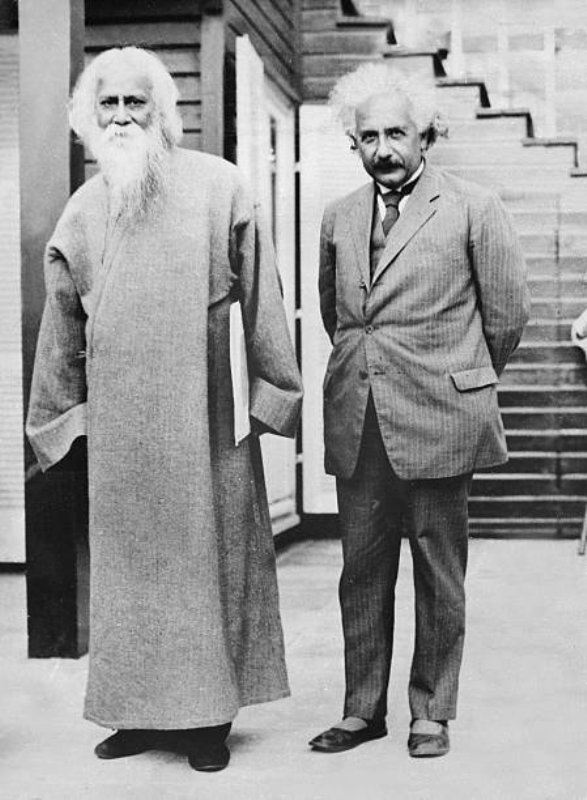
Rabindranath Tagore with Albert Einstein
Tagore’ Poetry
Tagore’s most acclaimed poetry collection, “Gitanjali,” made him the first Asian to receive the Nobel Prize in Literature in 1913. Tagore composed several other remarkable works, including “Manasi,” “Sonar Tori” (Golden Boat), and “Balaka” (Wild Geese). His poetic expression has a broad spectrum, including classical formalism, elements of humor, visionary themes, and moments of intense ecstasy. Tagore’s poetic technique is inspired by the writings of Vyasa, Kabir, and Ramprasad Sen, and it also reflects the impact of mystical Baul ballads, especially those by the bard Lalon.
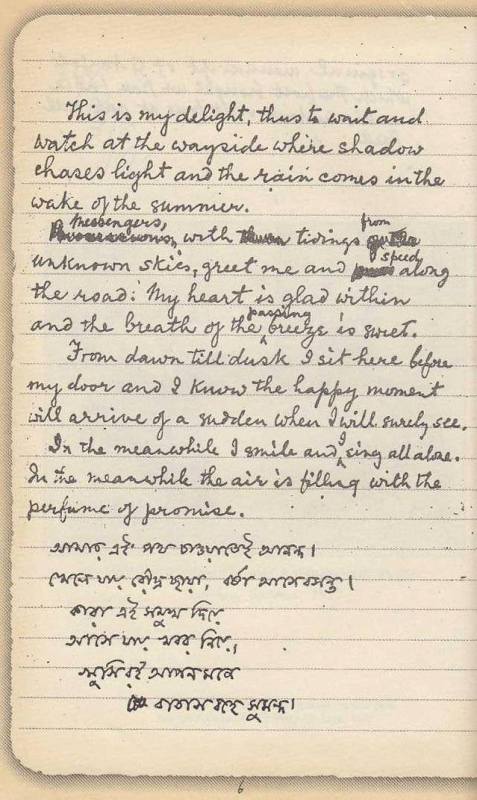
The original version of the manuscript of Gitanjali written by Rabindranath Tagore
Tagore’s Novels
Rabindranath Tagore wrote eight novels, including “Nastanirh” (The Broken Nest) in 1901, “Chokher Bali” in 1903, “Noukadubi” in 1906, “Gora” (Fair-Faced) in 1910, “Ghare Baire” (The Home and the World) in 1916, “Chaturanga” in 1916, “Shesher Kabita” in 1928, and “Jogajog” or “Yogayog” (Crosscurrents) in 1929. These novels depicted themes like Indian nationalism, the essence of Indian identity, self-discovery, personal liberty, solitude, and more.
Tagore’s Drama
At the age of sixteen, Tagore started getting the basics of drama alongside his brother Jyotirindranath. By the time he turned twenty, Tagore had written his first original play titled “Valmiki Pratibha.” Among Tagore’s theatrical works, his 1890 drama “Visarjan” stands out as the most notable one. His dramas often covered philosophical and allegorical themes, reflecting his creative depth. Some of his notable dramas are “Dak Ghar” (1912), “Raktakarabi” (1926), and “Chandalika” (1933). His adaptations for dance-drama including “Chitrangada,” “Chandalika,” and “Shyama” are collectively recognized as Rabindra Nritya Natya.
Tagore’s Short Stories
At the age of 16, in 1877, Tagore wrote his first story, “Bhikharini.” Tagore is considered to have invented the Bengali-language short story genre. Tagore’s short stories mostly capture the lives of India’s poor and ordinary citizens. Some of his popular short stories include “Kabuliwala” (published in 1892), “Kshudita Pashan” (published in 1895), and “Atithi” (published in 1895).
Rabindra Sangeet – Tagore’s Songs
Tagore was a notable songwriter and composer. He composed approximately 2,230 songs, creating a distinct genre known as Rabindra Sangeet. These songs mainly draw inspiration from the thumri style of Hindustani music. Known for their depth, Tagore’s songs cover a wide spectrum of human emotions. It is believed that –
In Bengal no cultured home where Rabindranath’s songs are not sung or at least attempted to be sung… Even illiterate villagers sing his songs.”
National Anthem
Rabindranath Tagore holds the record for being the only person in the world whose songs have been adapted as the national anthems in three different countries: Jana Gana Mana (India’s national anthem, adopted in 1950), Sri Lanka Matha (Sri Lanka’s national anthem, adopted in 1951), and Amar Shonar Bangla (Bangladesh’s national anthem, adopted in 1971).
Tagore’s Artworks
Apart from his literary achievements, Tagore is known for his work in visual arts such as drawing and painting, which he started at the age of sixty. His artworks have been displayed in many art galleries, in Paris and across Europe.
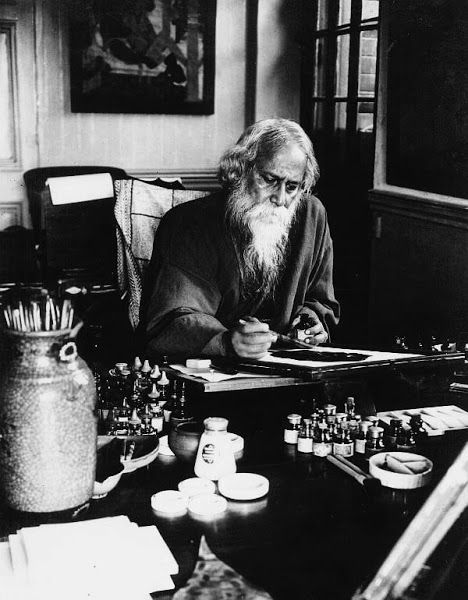
Rabindranath Tagore as a painter
Colour Blind
Tagore was likely red-green colour blind as he suffered a partial colour vision deficiency.
Later Years
In his later years, Tagore inclined towards scientific principles, integrating concepts from biology, physics, and astronomy into his poetry. His stories such as “Se” (1937), “Tin Sangi” (1940), and “Galpasalpa” (1941) also had elements of scientific knowledge. Although he suffered from chronic pain and illness during the last five years of his life, Tagore produced some of his most notable poetry during this period, including politically charged compositions like “Chitto Jetha Bhayshunyo” and “Ekla Chalo Re.”
Demise
In late 1940, Tagore fell unconscious and remained in a comatose state for a long time, and the 80-year-old Tagore eventually passed away on 7 August 1941, in an upstairs room of the Jorasanko mansion, where he spent his childhood years. Earlier, he had experienced a similar episode of being comatose in late 1937 and had undergone a surgical procedure on his kidneys. On 30 July 1941, nearly a week before his death, Tagore dictated a few lines to A. K. Sen (the brother of Sukumar Sen, India’s first chief election commissioner), which likely became his last poem. The lines read,
I’m lost in the middle of my birthday. I want my friends, their touch, with the earth’s last love. I will take life’s final offering, I will take the human’s last blessing. Today my sack is empty. I have given completely whatever I had to give. In return if I receive anything—some love, some forgiveness—then I will take it with me when I step on the boat that crosses to the festival of the wordless end.”
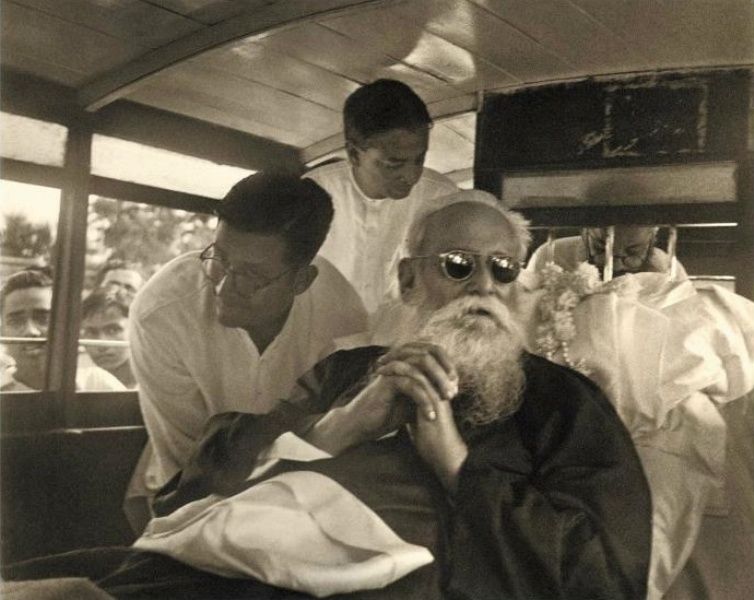
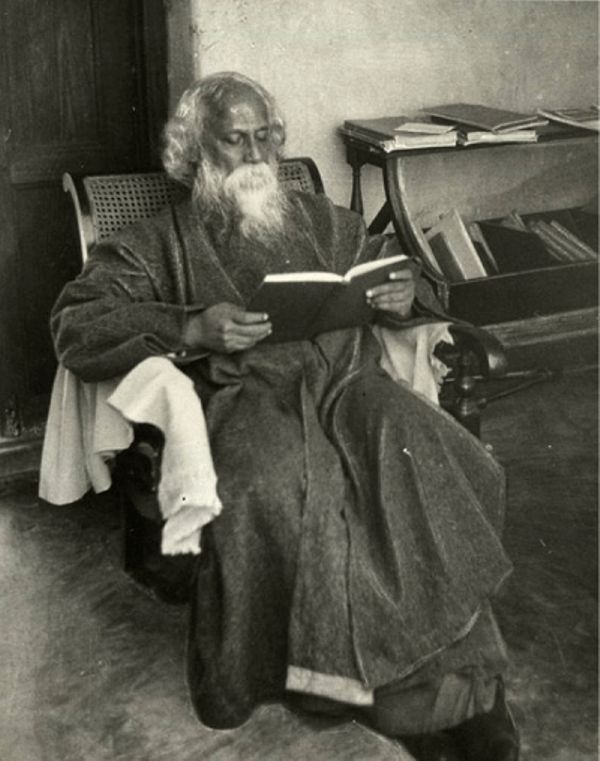
Rabindranath Tagore’s last photo clicked in 1941
!
Mahatma Gandhi Age, Death, Caste, Wife, Children, Family, Biography & More
Mahatma Gandhi Age, Death, Caste, Wife, Children, Family, Biography & More
!
B. R. Ambedkar Age, Death, Wife, Children, Family, Biography & More
B. R. Ambedkar Age, Death, Wife, Children, Family, Biography & More
!
Jawaharlal Nehru Age, Death, Caste, Wife, Children, Family, Affairs, Biography & More
Jawaharlal Nehru Age, Death, Caste, Wife, Children, Family, Affairs, Biography & More
!
!
!
Sardar Vallabhbhai Patel Age, Death, Wife, Family, Biography, & More
Sardar Vallabhbhai Patel Age, Death, Wife, Family, Biography, & More
!
!
Rani Lakshmibai Age, Caste, Husband, Children, Family, Story & Biography
Rani Lakshmibai Age, Caste, Husband, Children, Family, Story & Biography