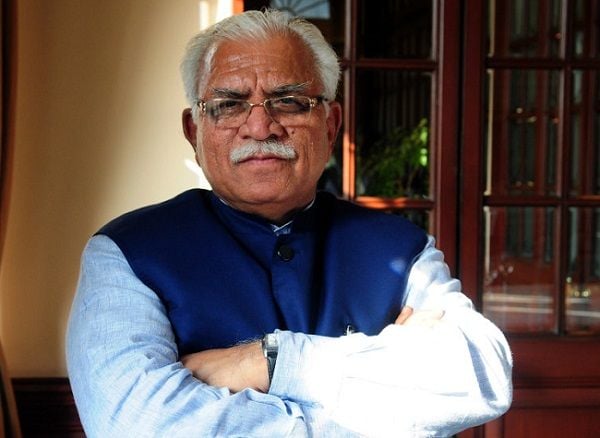
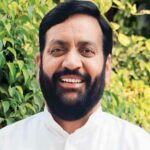
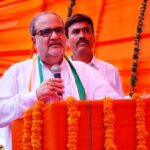
He belongs to a family that hailed from the Jhang district of Pakistan and moved to Haryana following the partition in 1947.
He spent his childhood in Nindana village in Haryana.
After that, Khattar’s entire family moved to Banyani village. The family decided to move to a new village as it purchased land there.
Khattar reportedly loaned some money to study at the Pandit Neki Ram Sharma Government College in Rohtak. There, he completed his matriculation. He became the first person from his family to pass the 10th class.
In school, he used to participate in various extracurricular activities, including debates and discussions. He also learnt the Tamil language while studying.
According to his family, Khattar used to pluck vegetables from his farmland, load them on his bicycle, and take them to a vegetable market. He used to follow this routine every day before going to school.
Khattar wanted to become a doctor. For this, he decided to enrol in a medical college in Haryana.
His father, Harbans, was against Monahar’s decision to study more as he wanted him to take up farming.
He, however, shunted the idea of pursuing graduation in medicine after he realised that running a business would earn him more money than a career as a doctor would as he’d have to spend a lot of time studying.
To pursue graduation, Khattar relocated to Delhi, where he, alongside his studies, started a clothing shop near Sadar Bazar.
After the shop began generating profits, he asked his family to leave Haryana and shift with him to Delhi.
Several sources claim that Khattar completed his graduation in 1972, while Kattar claimed in his electoral affidavit that he completed his graduation in 1975. check sources
The Economic Times
check sources
Manohar Lal Khattar – Affidavit
Manohar became a member of the Rashtriya Swayamsevak Sangh (RSS) in 1977. It was at a time when the Indira Gandhi
-led Union government had put an emergency in place.
Khattar decided to enrol in the RSS after he saw the members taking a stand against the imposition of emergency and getting imprisoned under the Maintenance of Internal Security Act (MISA).
In 1979, he decided to become a pracharak in the RSS after he went for Triveni Darshan.
After serving in the organisation for three years, Khattar was appointed as a permanent member, known as a pracharak. He went on to hold many important designations in the organisation.
As per sources, Khattar decided to remain a bachelor after he became a full-time member of the RSS. His parents were however against his decision.
While giving an interview, a cousin of Khattar claimed that his mother asked Khattar to start a family even after he took the oath to dedicate his life to social causes. To her requests, Manohar used to say that if she could ask one of his brothers to dedicate his life to social causes, he would immediately break his oath and return.
He has been credited with leading mass movements against the Indian government over various issues.
Khattar has also led numerous humanitarian efforts to provide aid and assistance to the flood victims in Dwarka, Delhi, and earthquake victims in the Uri and Poonch districts of Jammu and Kashmir.
He has played a vital role in improving the coordination between the RSS and the Vishwa Hindu Parishad (VHP) in conducting joint events.
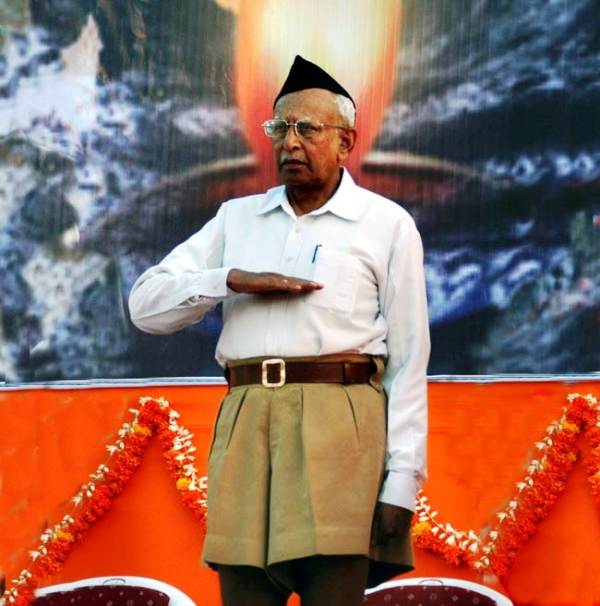
Manohar Lal Khattar’s picture taken in RSS uniform
As Haryana’s Sangathan Mahamantri, Khattar was handed the responsibility of making strategies for improving the functioning of the party in Punjab and Haryana. He also oversaw the formulation of electoral policies for the BJP.
Khattar came into contact with Narendra Modi
after the latter was appointed as the electoral in charge of the BJP in Haryana in 1996.
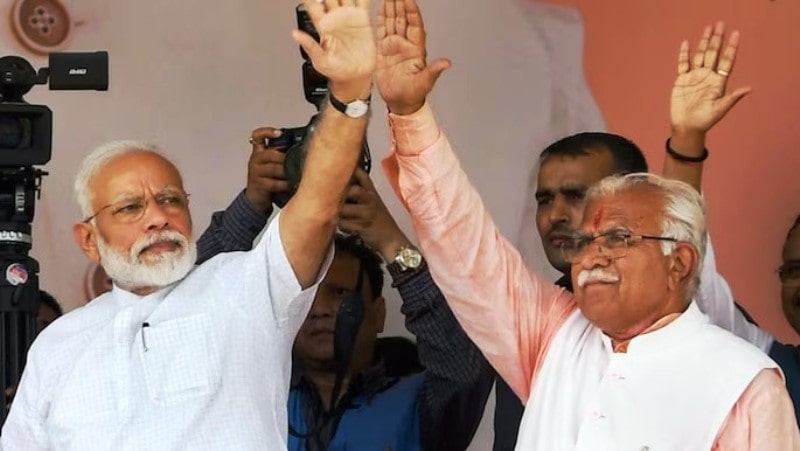
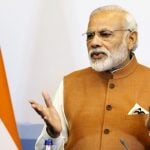
A photo of Prime Minister Narendra Modi with Manohar Lal Khattar
Khattar is credited with making an alliance with the Haryana Vikas Party and supporting Bansi Lal’s candidature as the Chief Minister of the state in the same year.
He later advised the party leadership to revoke their support to Lal’s government as it was disadvantageous for the party’s image.
In the 1999 Lok Sabha elections, Khattar is said to have played a vital role in helping the BJP win all 10 seats in Haryana. He did so by allying with Om Prakash Chautala.
Manohar Khattar played an important role in drafting strategies for the party during the 2002 elections in Jammu and Kashmir. Following his plan, the party managed to improve its image and secured 11 seats.
In the same year, on Narendra Modi’s insistence, Khattar was sent to Bhuj, Gujarat, from where Modi was contesting the Legislative Assembly elections. It is said that Khattar played a vital role in Modi’s victory from Bhuj, which was a stronghold of the INC.
Later, Khattar was made election in-charge of the BJP over 12 states.
He is credited with devising policies that led to the BJP winning a majority of seats in the 2014 general elections.
He was among the few BJP members who led the BJP’s Antyodaya Yojana.
Under his leadership, the BJP in Haryana started a magazine titled Bhajapa Ki Baat in 2000.
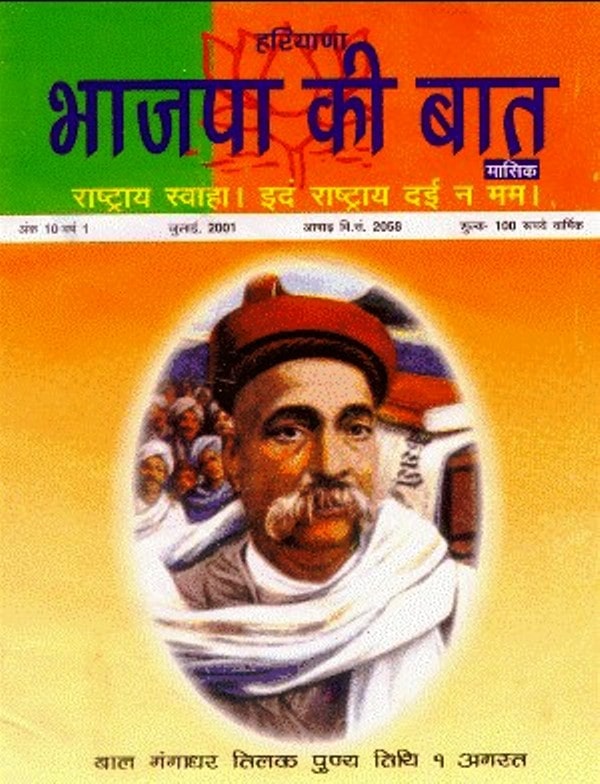
Cover page of the magazine Bhajapa Ki Baat
Khattar’s first electoral participation was in the 2014 Haryana state elections in which he got a total of 82,485 votes and won against his nearest rival, Jai Prakash Karnal, who contested the elections independently.
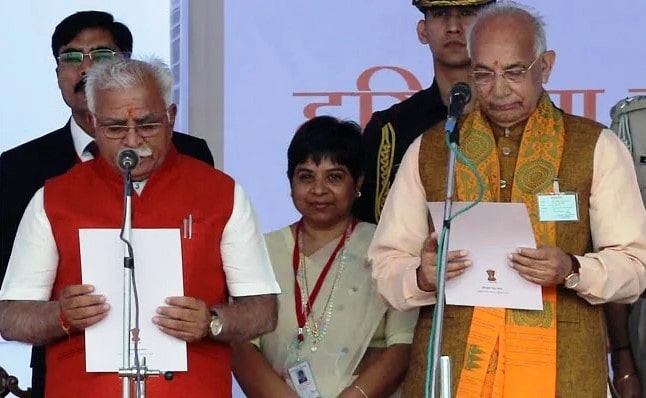
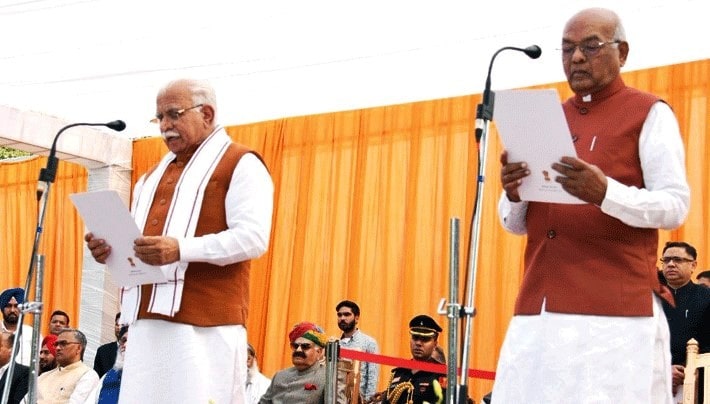
Manohar became Haryana’s 10th Chief Minister on 26 October 2014. He became the first CM to not belong to the Jat community.
After having been sworn in as the Chief Minister of Haryana in October 2014, he became the first one from BJP to hold the position.
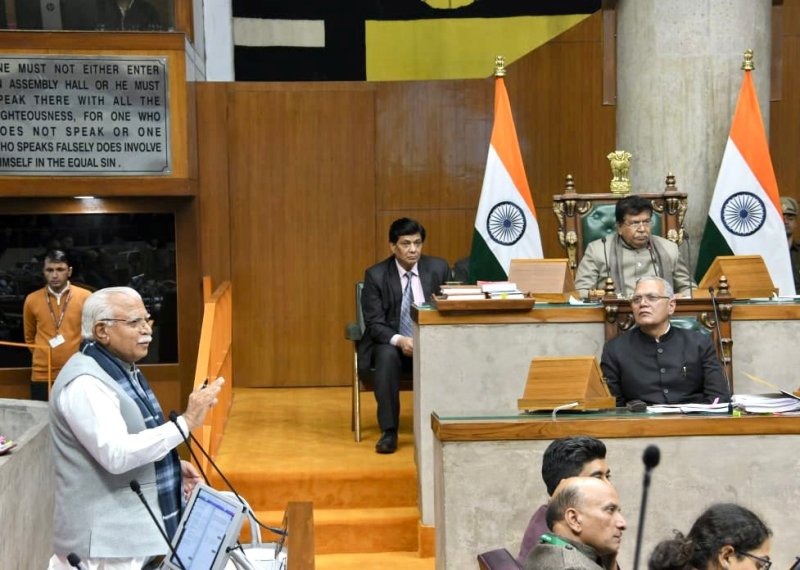
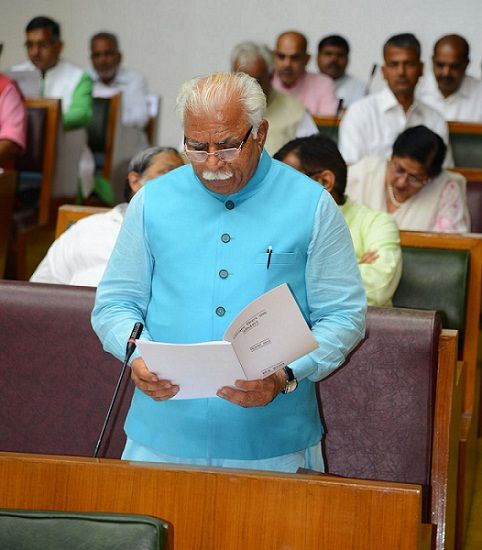
A photo of Manohar Lal Khattar taken while he was giving a speech in the Vidhan Sabha
He kept the Home, General Administration, Personnel & Training, Power, Town & Country Planning and Urban Estates, Administration of Justice, Electronics & Information Technology, Raj Bhawan Affairs, and Renewable Energy departments with him during his first tenure as a CM from 2014 to 2019.
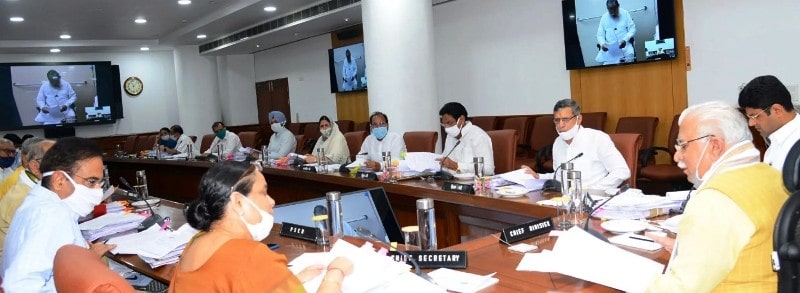
A photo of Khattar taken while he was chairing a meeting with cabinet ministers in Chandigarh
In 2016, after Garud Commando Gursewak Singh was killed in action during the Pathankot Airbase attack, the Khattar government announced erecting a memorial in his honour in Singh’s hometown.
In 2018, he was criticised for how the state government handled the farmers protesting against the farm laws of the Indian government. His statement “They don’t have any issues, they are just focusing on unnecessary things, not selling produce will bring losses to farmers” also received a lot of backlash. check sources
The Times of India
He won over an Indian National Congress (INC) candidate named Trilochan Singh, in the 2019 Vidhan Sabha elections after getting 79,906 votes.
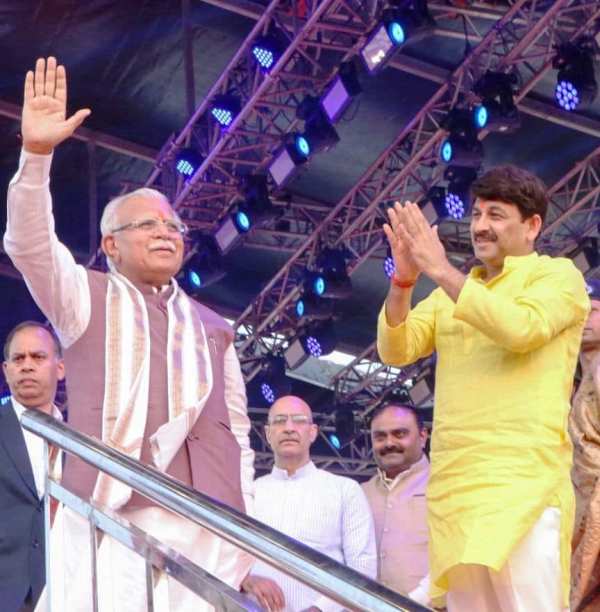
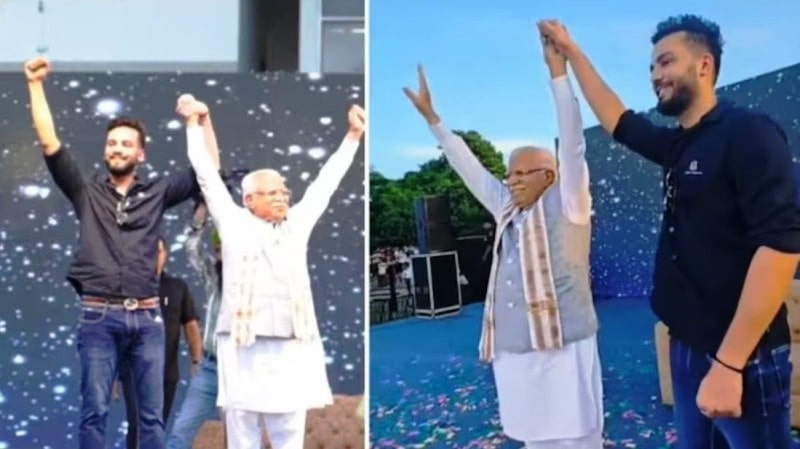
A photo of Manohar Lal Khattar taken with Manoj Tiwari during an election rally
In his second tenure as the CM, Khattar kept Finance, Town & Country Planning and Urban Estates, Public Health Engineering, Irrigation and Water Resources, Information Technology, Electronics and Communication, Information, Public Relations & Languages, Planning, Administration of Justice, Environment & Climate Change, Architecture, General Administration, Criminal Investigation (CID), Personnel & Training, and Raj Bhawan Affairs departments with him.
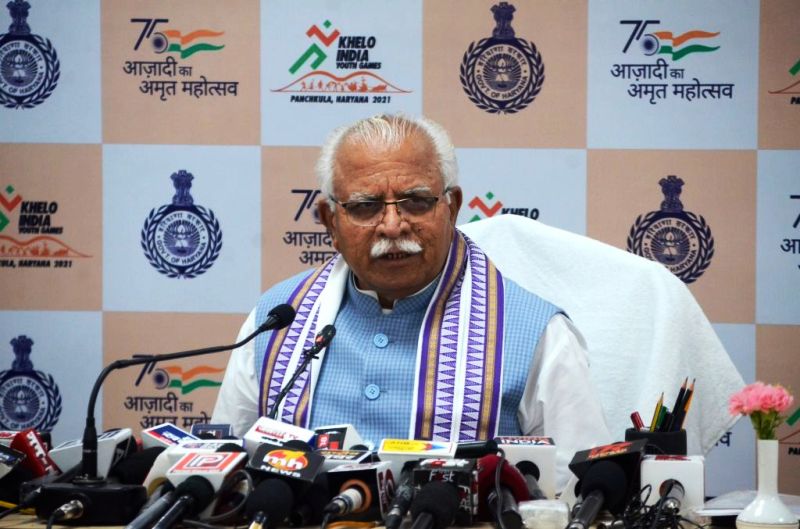
A photo of Manohar Lal Khattar taken while he was addressing the media during a press conference
He has brought many reforms to the state by implementing digital services such as e-services through Common Service Centres (CSCs), an E-stamping System in Property Registration, Aadhaar enrolment of children along with Registration of Birth, Aadhar-enabled Biometric Attendance System (AEBAS), and Digital Life Certificate (Jeevan Pramaan Patra).
To improve the safety of women in Haryana, Khattar, during a public meeting in 2015, revealed the government’s plan to create all-women-operated police stations in different parts of the state.
He later announced that the Haryana police would induct 500 women constables and establish Harsamay, an internet portal, where women can lodge FIRs online.
Logo of Haryana Police’s Harsamay website
As CM, Khattar urged the cops to maintain their physical fitness and proposed the inclusion of yoga in their training regime.
Thereafter, the Khattar-led state government implemented a Transparent Recruitment Policy (TRP) to reduce the instances of high-ranking officials indulging in malpractices while recruiting constables.
Khattar is credited with devising policies that improved the girl-to-boy ratio in the state. By 2021, there were 889 girls per 1,000 boys in the state.
Under his leadership, the supply of electricity in the rural areas of Haryana improved drastically. As per sources, the Haryana government was supplying electricity 24×7 in around 5,791 villages, making up 86 per cent of the total villages in the state.
The government also implemented “Mission Merit” under which around 1.10 lakh vacancies in the public sector were filled.
The net profit earned by the state by exporting goods and services under his chief ministership increased from Rs. 68,032 crore in 2014 to Rs. 2,45,453 crore in 2022.
In 2022, in an interview, Khattar expressed his disagreement over the 1947 partition of India. He went on to say that India, Pakistan, and Bangladesh should re-unite. He talked about it and said,
Partition should not have happened… Lekin Congress ke kuch logon ko satta lene ki shayad jaldi thi… agar thoda sa chhod dete satta ko, toh aisa ho sakta hai ki 5, 10, 20 saal baad… Partition nahi hua hota. ast Germany aur West Germany ikathe ho sakte hain… toh Bharat, Pakistan, Bangladesh nahi ikathe ho sakte.”
Neither does Khattar smoke tobacco nor does he consume alcohol. He has initiated many anti-tobacco campaigns during his tenure as the CM.
Khattar received his graduation degree from Delhi University’s School of Open Learning in 2023 despite completing his graduation more than 40 years ago.
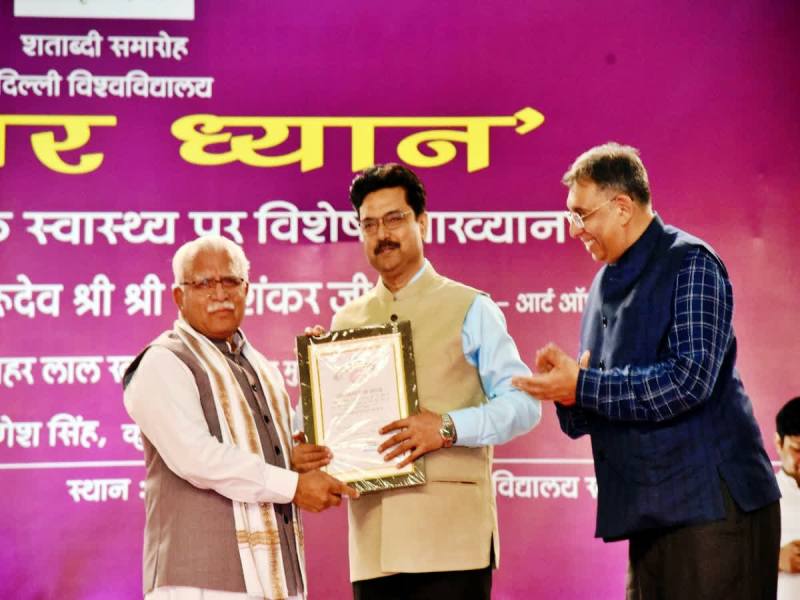
A photo of Manohar Lal Khattar taken while he was receiving his graduation degree
In February 2023, fake news of Khattar passing away with a fake death certificate was circulated on the internet.
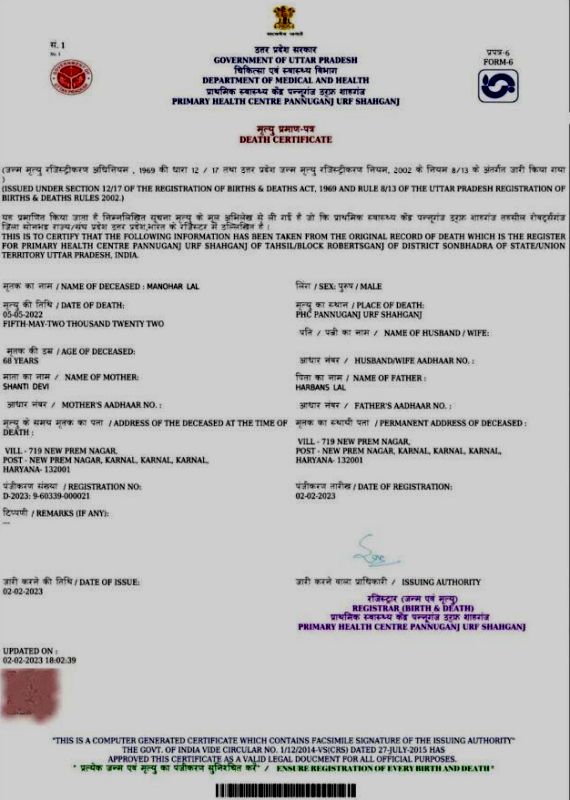
A photo of the fake death certificate circulated on social media
In January 2024, Khattar donated his ancestral home in Baniyani village, Rohtak, to the district authorities. According to him, the authorities would convert the house into a library which would give free and easy access to books and other reading materials to the villagers. Khattar talked about it, in an interview, and said,
I spent my childhood in this village. Today, I have given my house to the village to set up an e-library in the building.”